Skip to content
SiteList

Heyhelp vs Pullsy: Gmail automation or tone-matched replies?

Last updated (5d ago)

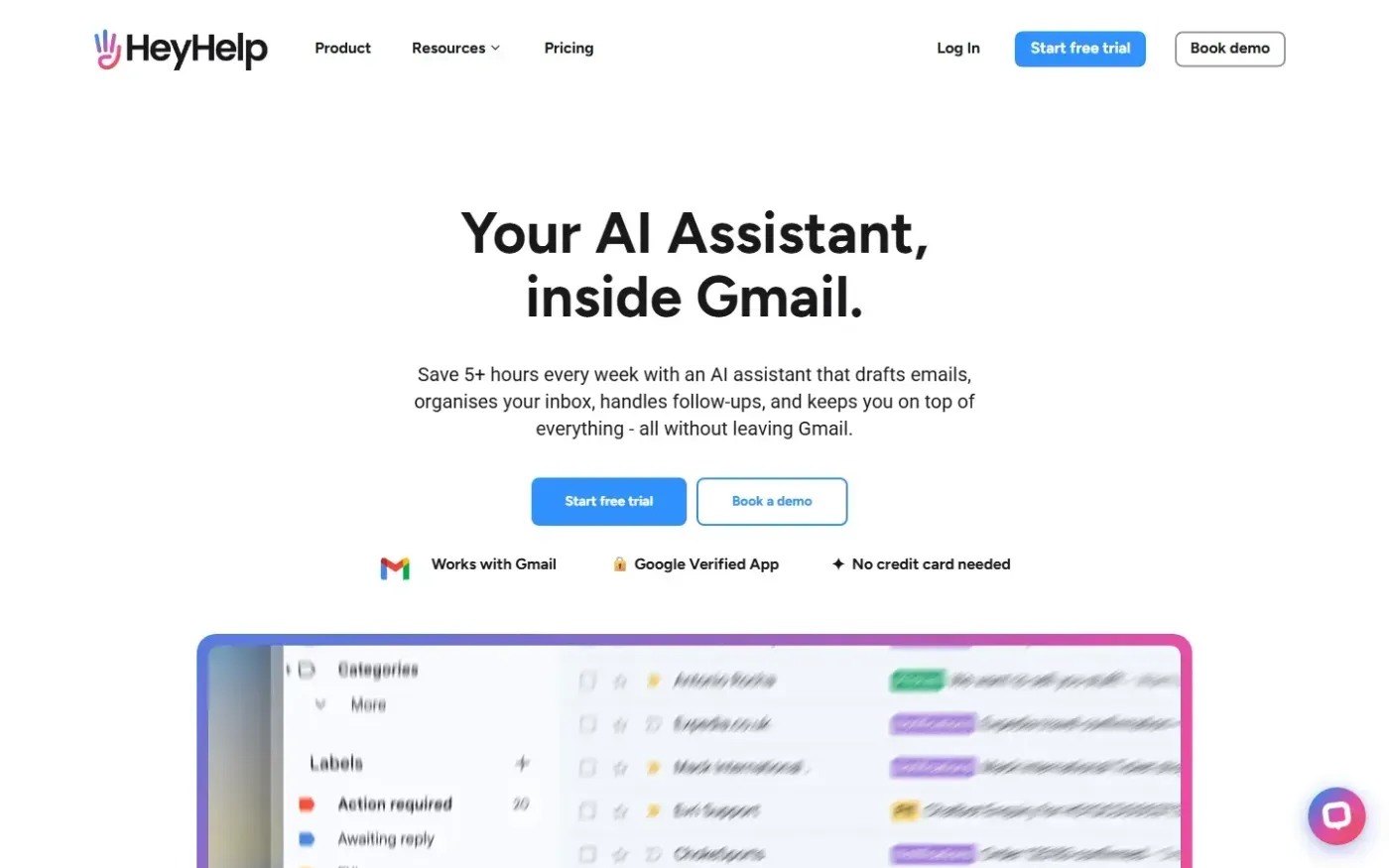
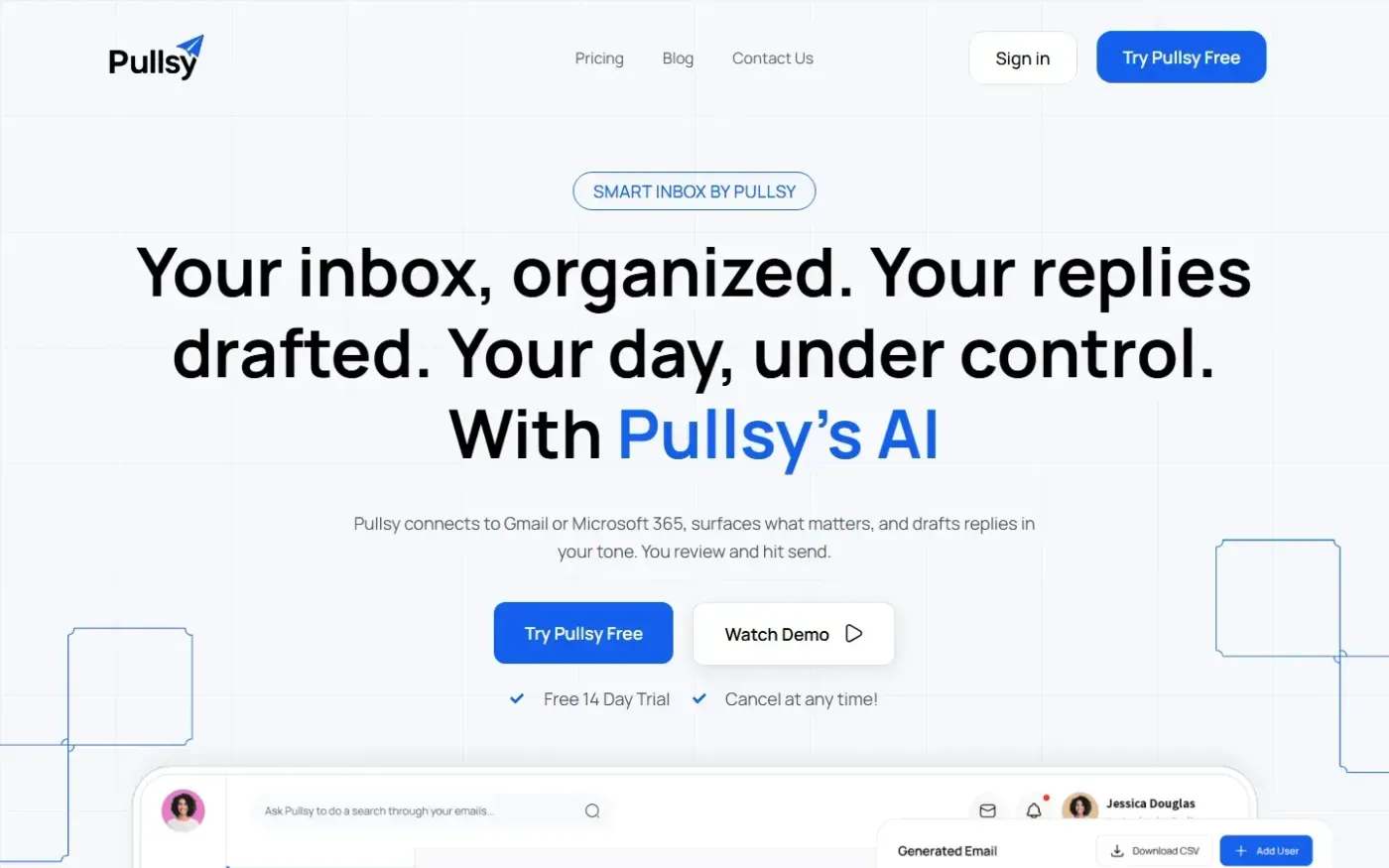
Heyhelp and Pullsy are compared using their captured homepages.

Homepages captured Oct 14, 2026

Feature comparison

FeatureHeyhelpPullsy
Gmail integrationFoundFound
AI email draftingFoundFound
Inbox organizationFoundFound
Adaptive learningFoundFound
Automated follow-upsFoundNot found
AI schedulingFoundNot found
Multiple drafting tonesNot foundFound
One-click sendingNot foundFound
Meeting remindersNot foundFound

✓ found in our review of the product’s site. — not found there, which doesn’t mean it’s missing.

Pricing, sourced

Heyhelp

Pro — yearly billing
$12/user/monthbilled yearly ($144/year)
Pro — monthly billing
$20/user/monthbilled monthly
Connect
$199 one-off paymentlifetime access; AI provider usage charged separately

Checked Pricing page

Pullsy

Starter — monthly billing
$15/month
Pro — monthly billing
$25/month
Enterprise — monthly billing
$30/user/month
Starter — annual billing
$144/year ($12/month billed annually)
Pro — annual billing
$240/year ($20/month billed annually)
Enterprise — annual billing
$288/year ($24/month billed annually)

Checked Pricing page

Choose Heyhelp for a Gmail-focused workflow with explicitly documented follow-ups, scheduling and a choice between bundled AI usage and your own API key. Choose Pullsy when tone-matched drafting and inbox prioritization matter most. Heyhelp makes its AI cost model clearer; Pullsy offers more connection options across its plans. Both have public-site weaknesses that warrant checking during a trial.

Heyhelp fits broader Gmail automation; Pullsy emphasizes reply style

For a Gmail user who wants drafting, sorting, follow-ups and scheduling in one assistant, Heyhelp is the stronger documented fit. Pullsy is a better starting point when the main problem is deciding which messages deserve attention and writing replies in a consistent voice. Its review identifies adaptive writing-style learning, context-aware suggestions, multiple tones and one-click sending. These are documented capabilities, rather than demonstrated differences in output quality. Heyhelp product site, Pullsy product site.

The deciding constraints are cost structure, workflow coverage and confidence in the route to help. Heyhelp offers a bundled subscription or lifetime Connect access with separate AI-provider charges. Pullsy publishes plans with different inbox and calendar connection limits, but its teammate charges need clarification before a team can confidently calculate its bill. Neither product earns an unconditional recommendation from its public-site review.

Heyhelp documents more Gmail tasks, but its public routes leave gaps

Our review found a clear Gmail proposition and direct routes to pricing, help, signup and a demo. The documented feature set includes AI drafts, sorting, tagging, archiving, follow-ups, scheduling, a knowledge base and self-learning. For someone replacing several manual Gmail routines, that breadth gives Heyhelp a concrete reason to make the shortlist. Follow-ups and scheduling are not established in Pullsy's review beyond its separately documented meeting reminders. Heyhelp product site.

The purchase path is less straightforward than the product promise. Our review found a trial alongside several purchase routes, including Connect lifetime access. The practical distinction is who manages AI consumption: Pro bundles it, while Connect requires an API key and direct provider payments. A buyer seeking predictable expenditure should weigh that distinction more heavily than the lifetime label. Heyhelp pricing, verified Nov 21, 2026.

There is also a gap in visible product-update information. Our review found that Heyhelp's changelog contained only a title and short description, with no links, buttons or forms. That makes it harder to assess recent development through that route. Buyers depending on follow-up or scheduling behavior should use the demo or trial to confirm the exact workflow they need. Heyhelp changelog.

Pullsy's drafting emphasis comes with a broken help route

Pullsy's review identifies a coherent combination of priority surfacing and tone-matched drafting. Adaptive writing-style learning, context-aware suggestions and multiple tone options make it particularly relevant to professionals whose email workload involves frequent replies requiring different levels of formality. One-click sending is also documented, although the review does not establish how often drafts are ready without editing. Pullsy product site.

Its public presentation weakens confidence in the evaluation process. Our review found that the homepage H1 read “GRAB A COUPON CODE,” while the actual inbox-assistant proposition appeared in supporting headings. That inconsistency does not establish a defect in the assistant, but it makes the page less reliable as a guide to the product. Buyers should ground their decision in the actual workflow and plan terms. Pullsy homepage.

Painterly homepage-style scene representing the shared function of Heyhelp and Pullsy.

More consequentially, the homepage's Help Desk link led to a page displaying “Not found,” with no links, buttons or forms. For a team that needs dependable onboarding or help when inbox behavior changes, this is a concrete reason to verify an alternative support route before subscribing. Heyhelp exposes a help route, but the review does not establish support response quality for either product. Pullsy Help Desk.

Both sites make mobile evaluation harder

Heyhelp's homepage had a measured mobile transfer of 12,734 KiB. Its mobile field LCP was about 4.0 seconds, while its lab LCP was about 3.0 seconds. Our review also found blocked mobile zoom and 41 interactive elements below the measured tap-target standard. These findings matter to buyers who research or sign up on a phone, especially those who need text magnification. They do not measure the Gmail assistant's processing speed. Heyhelp homepage review evidence.

Pullsy's homepage recorded mobile lab LCP of about 7.0 seconds and time to interactive of about 12.5 seconds. No field metrics were returned. That gives a specific reason to expect friction when evaluating its site on mobile, but it does not support a like-for-like real-world speed comparison with Heyhelp. Pullsy's review found usable mobile tap targets, alongside small input text and inaccessible form names. Neither public site is a strong choice for an effortless mobile evaluation. Pullsy homepage review evidence.

Heyhelp offers bundled or API-key pricing; Pullsy offers connection tiers

Heyhelp lists Pro at $12 per user per month billed yearly, or $20 per user per month billed monthly. Its pricing page explicitly describes the annual payment as $144 and says Pro includes AI usage without an API key. Connect costs $199 once for lifetime access, requires your own API key and leaves provider usage charges payable separately. It is therefore not a fixed lifetime total cost. Heyhelp offers a seven-day trial with no credit card required. Heyhelp pricing, verified Nov 21, 2026.

Pullsy lists monthly Starter at $15, Pro at $25 and Enterprise at $30 per user per month. Its annual options show $144 for Starter with a $12 monthly equivalent, $240 for Pro with a $20 monthly equivalent, and $288 for Enterprise with a $24 monthly equivalent. Starter includes one inbox connection, Pro three and Enterprise four, with matching calendar connection counts. Each plan also lists $10 per month for additional teammates. The relationship between that teammate charge and Enterprise's per-user price is not explained in the visible terms. Pullsy advertises a 14-day trial; a permanent free plan is not established for either product. Pullsy pricing, verified Nov 21, 2026.

For an individual paying annually, Heyhelp Pro and Pullsy Starter both display a $12 monthly equivalent. Their packaging differs: Heyhelp explicitly bundles AI consumption, while Pullsy Starter specifies one inbox and one calendar connection. Heyhelp's comparable connection limits and Pullsy's AI-consumption limits are not established here, so the matching headline amount does not establish equivalent value. Heyhelp pricing, Pullsy pricing, both verified Nov 21, 2026.

The SiteList scores are effectively tied

Heyhelp's SiteList AI review score is 62.3/100; Pullsy's is 61.7/100. Both fall in the fair band. The small gap is less useful than the underlying findings: Heyhelp has clear Gmail task coverage but weak mobile accessibility and update visibility; Pullsy has specific drafting capabilities but a broken help route and inconsistent homepage hierarchy. These scores assess the reviewed public surfaces and do not establish which assistant produces better emails. Heyhelp has no verified user reviews yet. Pullsy has no verified user reviews yet.

Neither review establishes draft accuracy, actual time saved, automation reliability or support response times. Use the trial to check the specific messages and actions that determine value for your Gmail workload.

Questions buyers actually ask

Which assistant better fits Gmail follow-ups and scheduling?

Heyhelp is the stronger documented fit because its review explicitly identifies AI follow-ups and scheduling. Pullsy documents meeting reminders, but equivalent follow-up automation and scheduling are not established. Confirm the exact actions you need during the trial.

Does Heyhelp Connect eliminate ongoing AI costs?

No. Heyhelp Connect lists lifetime access for a $199 one-off payment, but you bring your own API key and pay the AI provider directly for usage. Pro bundles AI usage. These terms appear on Heyhelp's pricing page, verified Nov 21, 2026.

Which product is cheaper for a team?

The published terms do not establish a reliable team-wide comparison. Heyhelp Pro charges per user. Pullsy lists additional teammates at $10 per month while Enterprise also uses per-user wording. Confirm Pullsy's billing calculation and each product's required connection capacity before comparing totals.

Can I try either assistant without buying a permanent plan?

Heyhelp advertises a seven-day trial with no credit card required. Pullsy advertises a 14-day trial. A permanent free plan is not established for either product. Both pricing pages were verified Nov 21, 2026.

Do the reviews show which assistant writes better replies?

No. Pullsy documents tone options and adaptive writing-style learning; Heyhelp documents AI drafts and self-learning. The reviews do not establish comparative draft accuracy or editing effort. Their website performance measurements also do not measure assistant response speed.

Read Heyhelp reviewRead Pullsy review

Built from SiteList technical reviews; user reviews count once a product has 3 approved. Pricing facts carry their source and date; if something has drifted, use “Report outdated” above to schedule a re-check.