SiteList review score
RunOnVPS separates official requirements from estimates clearly. Strengthen self-serve documentation and tighten programmatic content QA.
Reviewed on Nov 20, 2026
runonvps.com
Unclaimed listingSiteList review score
RunOnVPS separates official requirements from estimates clearly. Strengthen self-serve documentation and tighten programmatic content QA.
Reviewed on Nov 20, 2026
Verified user rating
—
No verified reviews yet — the evidence locker is empty.
Captured during our latest review on Nov 20, 2026
RunOnVPS is aimed at self-hosting operators and technically capable individuals or small teams choosing a VPS for one or more open-source applications.
It helps a self-hosting operator estimate whether an application fits a low-cost VPS before renting or resizing a server, using a visible distinction between official requirements and estimates.
In the supplied controlled lab run, the homepage recorded a 960 ms mobile LCP, 0 ms TBT, and 0 CLS. No CrUX field values were supplied, so this is not a real-user performance verdict.
No. The current crawl lists the pricing model as unknown and the price range as ?-? USD. Buyers should confirm any commercial terms directly before making a decision.
It provides embedded FAQ answers and breadcrumb context, but the docs and self-serve help dimension scored 58/100. Expanding that support layer is the clearest improvement for buyers who need more guidance.
Answers are based on SiteList's latest evidence review. Read the full review.
RunOnVPS scores 86/100 for helping self-hosting operators size a VPS, with a clear separation between official requirements and estimates as its strongest trust signal. Its most material weakness is the thin self-serve documentation layer, alongside a programmatic content QA risk that should be tightened as the directory grows.
86/100: strong product with fast performance and fixable documentation gaps
No reviews yet. The evidence locker is empty.
Reviews from verified users appear here once approved.
Reviews are from the SiteList community. Some reviewers received incentives — disclosed in the review, always. The verdict is never for sale.
Home
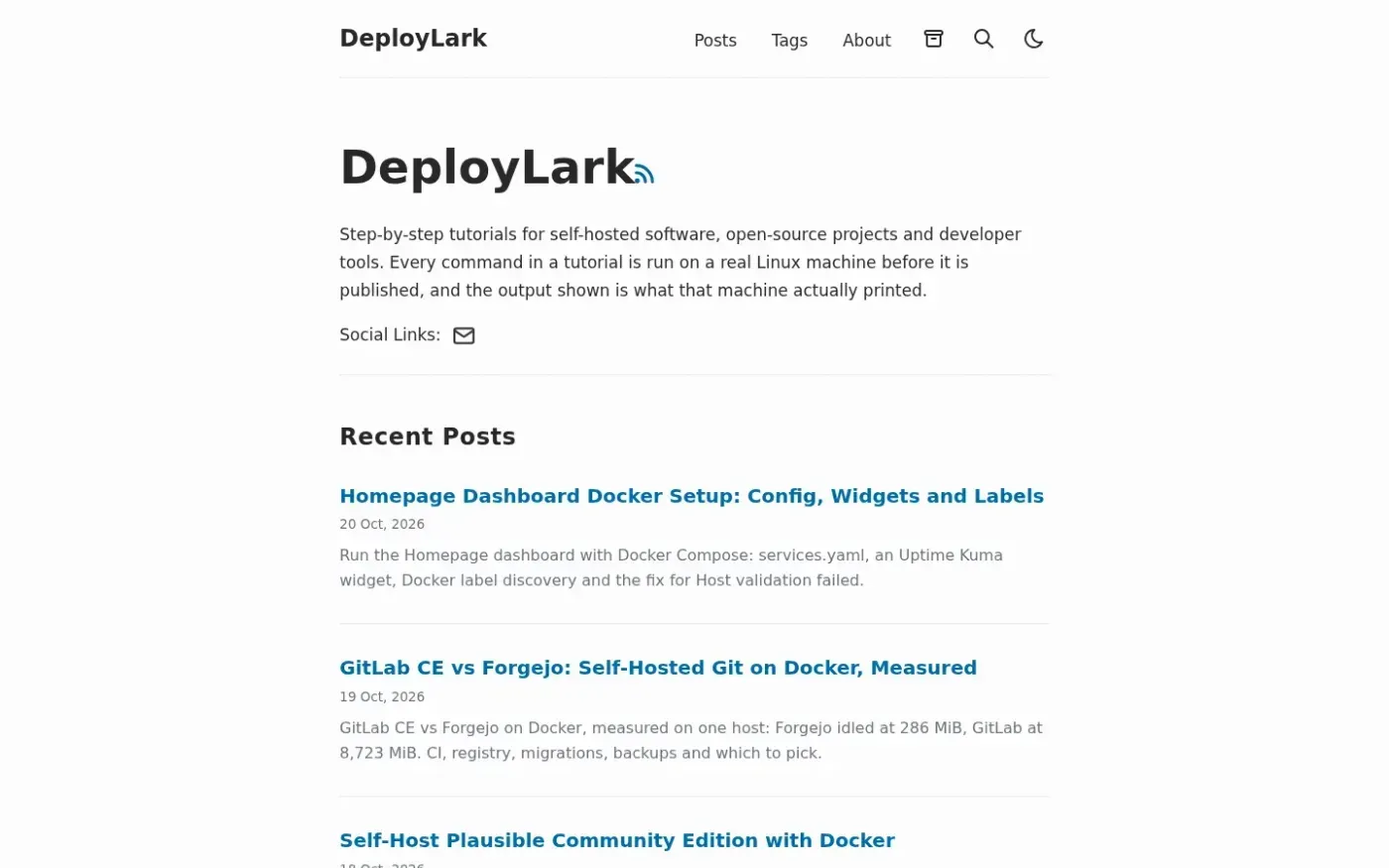
Deploylark screenshot 1 of 4: Home
deploylark.com
DeployLark publishes step-by-step tutorials for self-hosted software, open-source projects, and developer tools, including Docker Compose guides and error fixes. It says each tutorial command is run on a real Linux machine before publication, with the machine's output shown.
Home
CodeBurn — See where your AI coding spend actually goes screenshot 1 of 4: Home
codeburn.app
CodeBurn is a free, open-source, local-first tool that tracks AI coding token usage and cost across dozens of developer tools. It breaks down spend by model, project, and task using session files already on the user's disk, with no data uploaded.
whop.sh
The Whop CLI gives developers, creators, and automation agents command-line access to Whop API resources.
Home
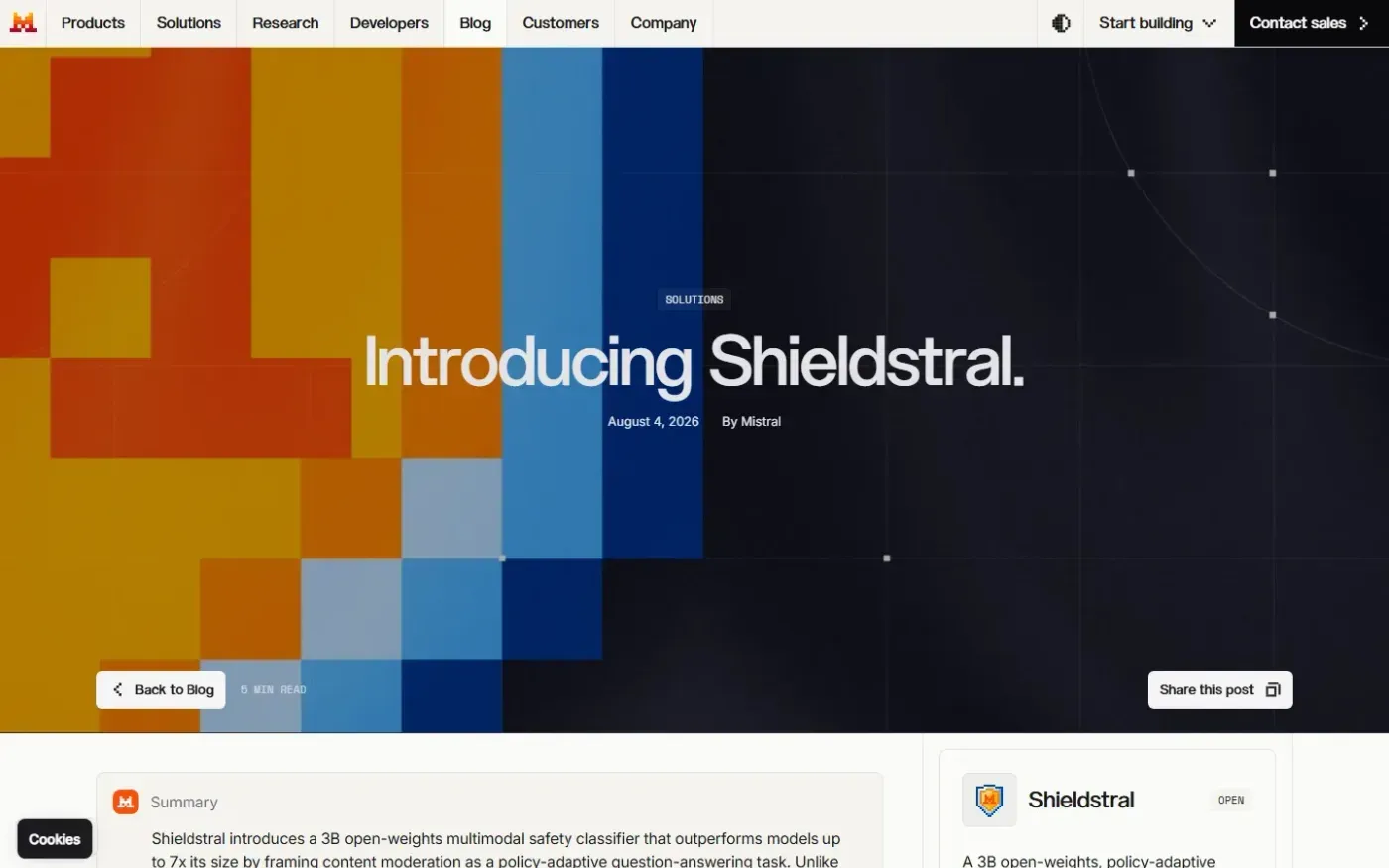
Shieldstral — Define safety at runtime for text and images screenshot 1 of 4: Home
mistral.ai
Shieldstral introduces a 3B open-weights multimodal safety classifier that outperforms models up to 7x its size.