ProjectWizards ranks first for Apple-based teams that need detailed planning and reliable offline work. Projectplanner is the stronger entry point for AI-generated project documents, while Swatle offers lower per-user pricing for teams combining projects, chat, forms, and shared knowledge.
ProjectWizards wins for Apple-native planning and offline work
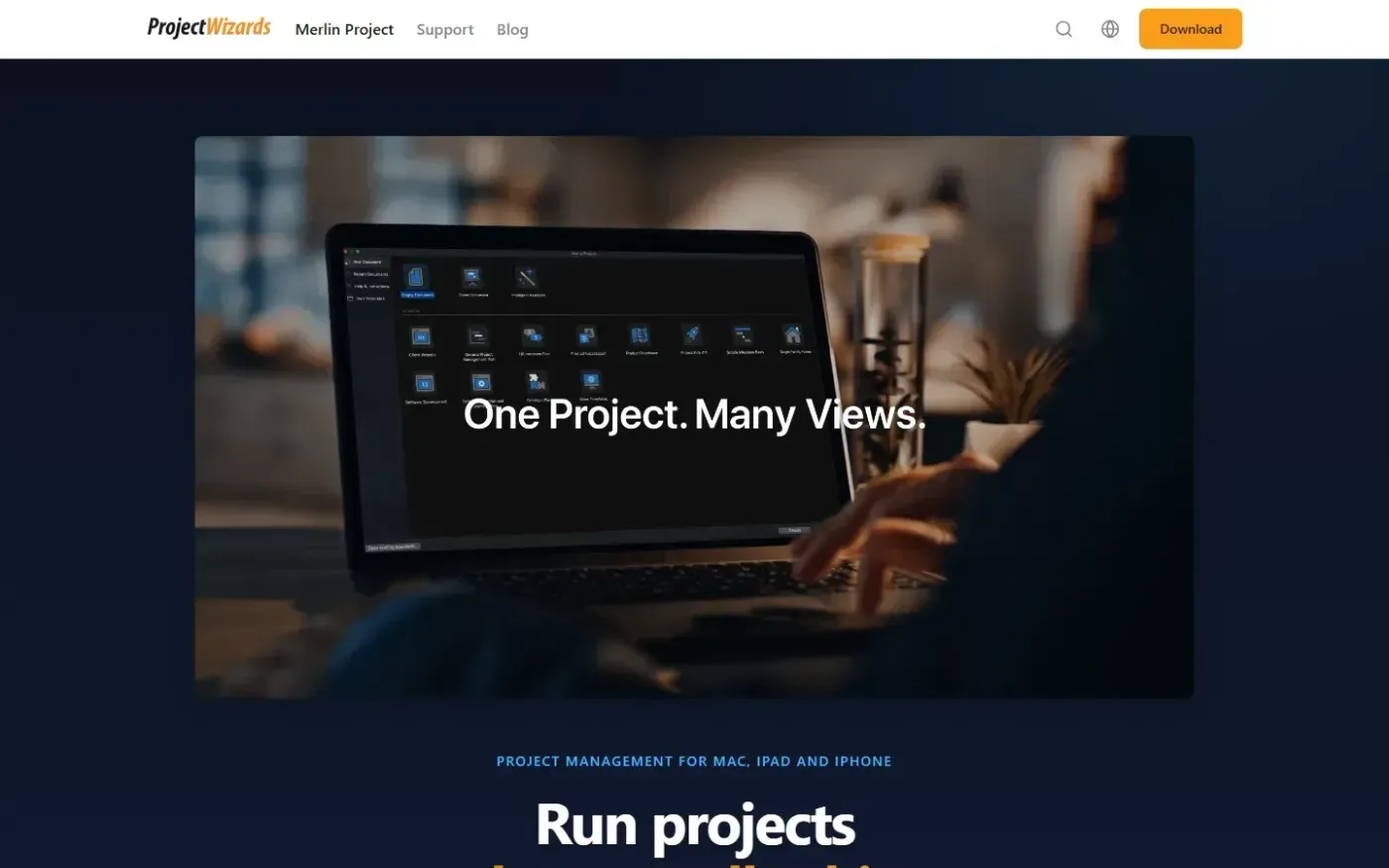
ProjectWizards ranks first. Its confirmed planning set includes Gantt charts, Kanban, mind maps, workload planning, Microsoft Project file exchange, MagicSync, and offline operation. That combination suits agencies, studios, and technical teams working across Mac, iPad, and iPhone—especially when connectivity cannot be assumed.
The offline capability is the decisive distinction. ProjectWizards states that teams can remain productive without a connection and synchronize through MagicSync when they return online.
The constraint is the buying experience around the product. Our review found pricing buried and the trial path spread across multiple clicks. It also found a 2.1-second mobile LCP, a 6.0-second Speed Index, body-text contrast of 3.2:1, no skip link, no main landmark, and disordered headings. Those issues do not establish a weakness in the application itself, but they make evaluation harder—particularly for mobile visitors and people using assistive technology. See the Merlin Project product page.
Projectplanner centers AI-generated deliverables
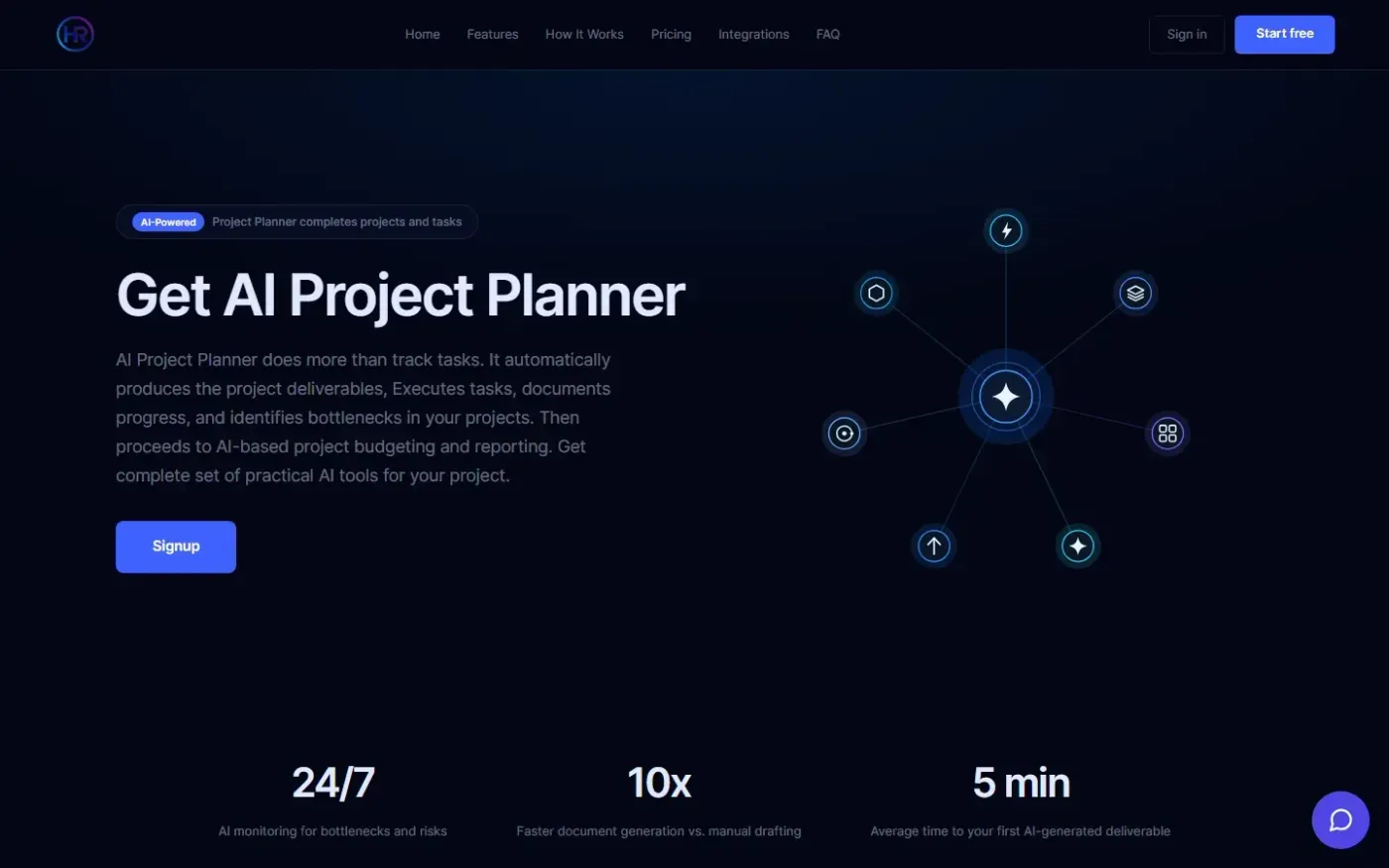
Projectplanner ranks second and is the clearest choice when the main goal is reducing planning administration. Confirmed capabilities include intelligent task breakdown, cost estimation, project-document generation, automated progress reports, bottleneck analysis, forecasting, resource optimization, and real-time collaboration.
Its public site was also the fastest of the three in our review: mobile LCP was 1.2 seconds, compared with 2.1 seconds for ProjectWizards and 12.8 seconds for Swatle. That matters during evaluation because prospects can reach the product and pricing information with less delay.
The tradeoff is weaker trust and decision support around an otherwise capable proposition. Our review found a nonexistent URL returning a 200 response with a “Coming soon” page, while the app host pointed its canonical URL to a different product domain. Active navigation also led to unfinished About, Changelog, and Contact pages, and substantial content appeared as unusually long unbroken paragraphs. These are website and publishing weaknesses, not proof that its AI features perform poorly, but teams conducting vendor due diligence should verify product maturity, support, security, and data-handling details directly. See Projectplanner.
Swatle is the lower-cost collaboration suite, with the slowest evaluation path
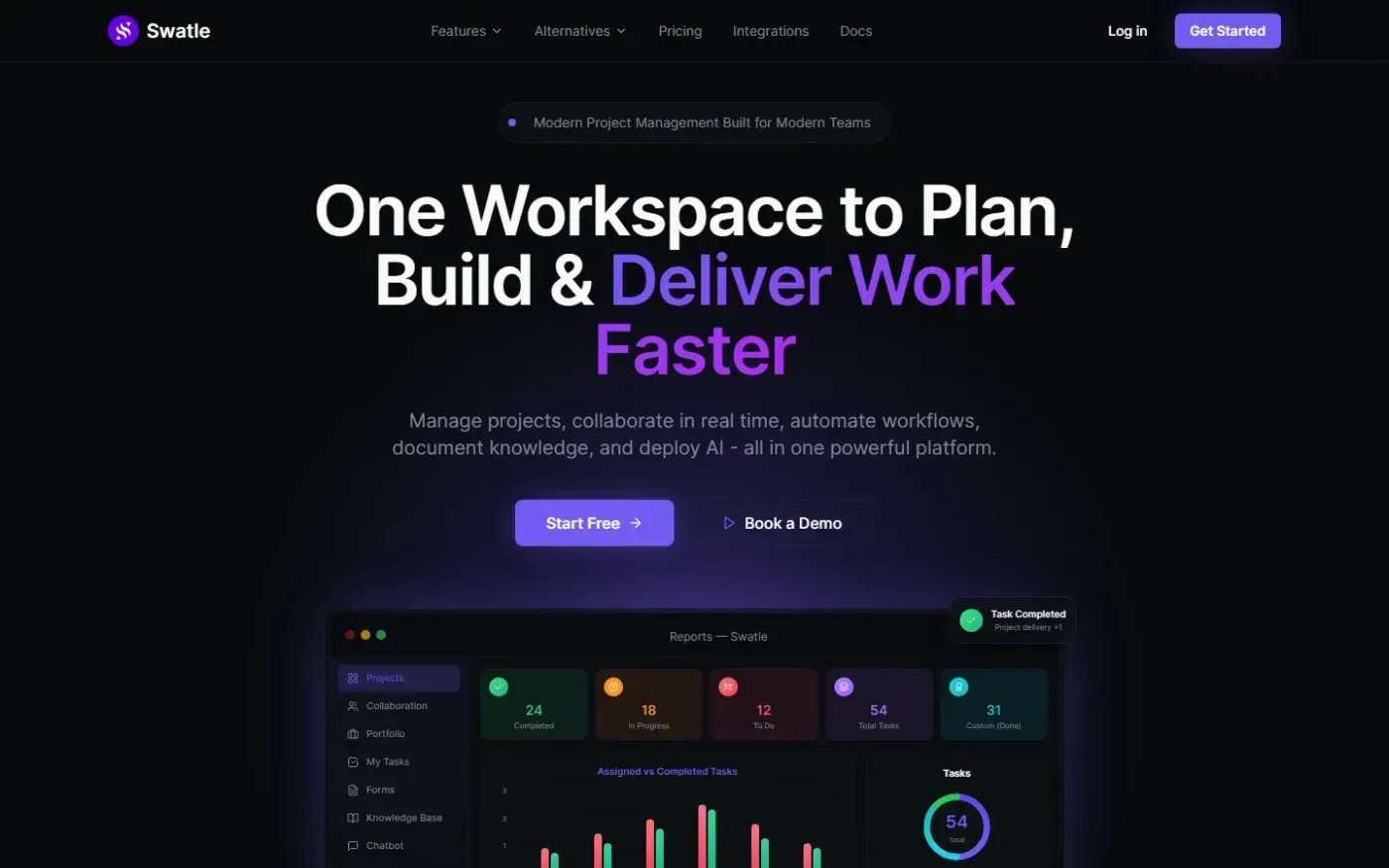
Swatle ranks third overall, but it wins a narrower scenario: teams seeking project management alongside an AI support chatbot, knowledge base, multi-project management, and task-collection forms at a stated per-user price below the other visible paid offer in this comparison.
The main cost is confidence during signup and evaluation. Our review measured a 12.8-second mobile LCP and found 186KB of render-blocking JavaScript. It also found unlabeled email and password controls in the app, which can block the signup flow for screen-reader users. Swatle's comparison pages list differences from products such as ClickUp and Jira, but our review found that they did not turn those differences into a defended recommendation for a particular buyer.
Swatle's design foundations were otherwise solid, and its site clearly exposes Basic, Pro, and Enterprise segmentation. Choose it when chat, knowledge, forms, and project coordination belong in one workspace and the organization is prepared to validate accessibility and day-to-day performance before rollout. See Swatle.