DataRobot has the higher SiteList review score at 75.6/100, while H2O.ai offers the clearer confirmed deployment choices for air-gapped, on-premises, and cloud VPC environments.
Quick verdict
DataRobot is the stronger overall choice on the available review evidence: 75.6/100 versus H2O.ai at 62.3/100. DataRobot's positioning scored 82/100 and its performance scored 80/100. H2O.ai has credible enterprise positioning and technical foundations, but its performance score was 22/100, with severe stability and delivery problems in the reviewed measurements.
DataRobot — stronger positioning and performance
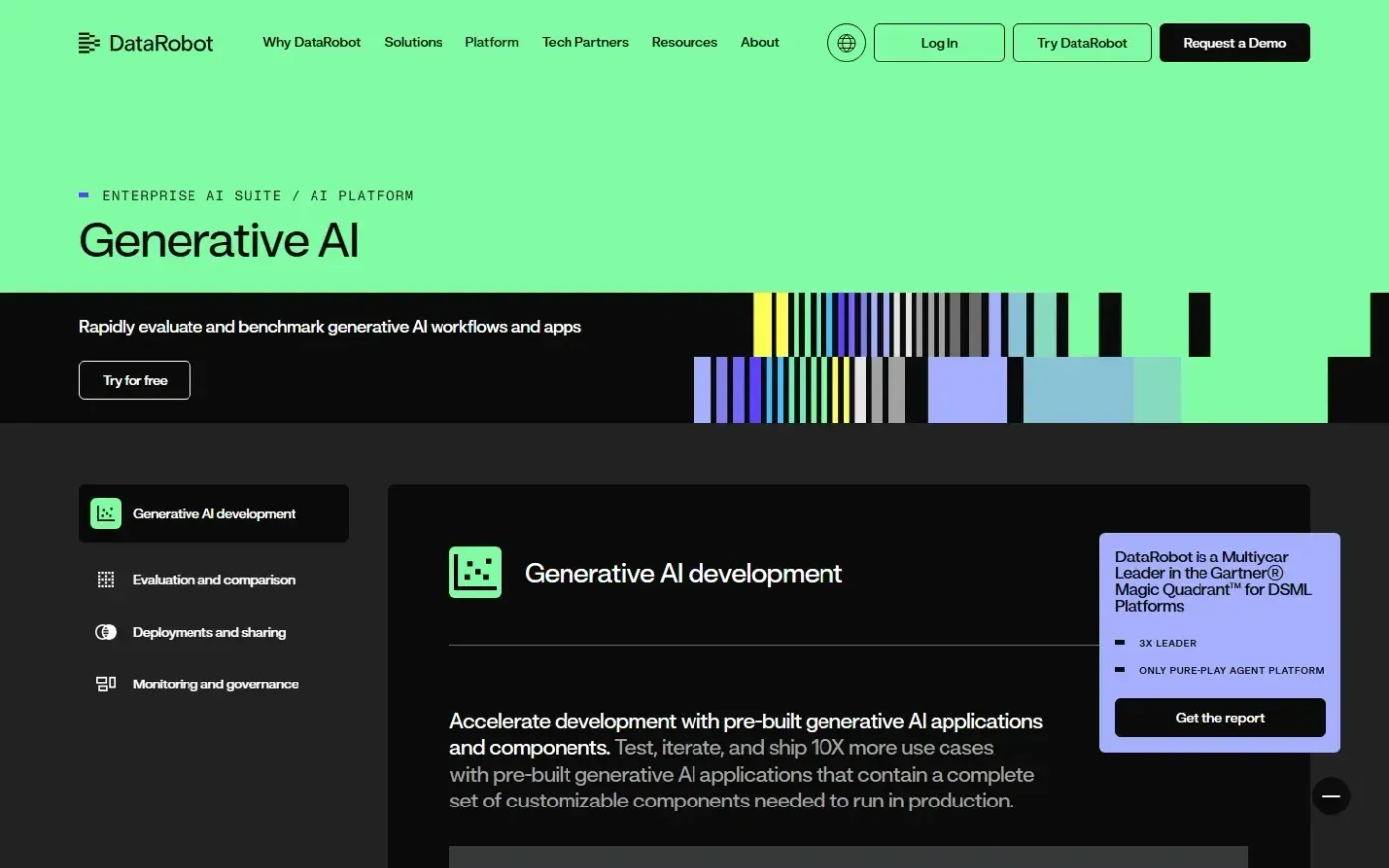
Strengths: The reviewed product material confirms AI governance, AI observability, feature engineering, generative AI model evaluation and benchmarking, prompt tuning, and vector chunking. Its positioning is clear for AI practitioners and enterprise decision-makers. Its core landing pages also passed the cited real-user Core Web Vitals thresholds.
Weaknesses: DataRobot's writing quality scored 62/100 and editorial QA scored 65/100. The review identified dense copy, long sentences, multiple H1 tags on solution pages, and missing title tags on some landing pages. Its pricing page did not list a public amount.
H2O.ai — stronger deployment control, weaker performance
Strengths: The reviewed product material confirms air-gapped deployment, cloud VPC deployment, a generative AI platform, on-premises deployment, predictive AI, and sovereign AI. The review also describes credible enterprise positioning and proof. Its technical SEO and organic-traffic dimensions scored 88/100 and 90/100.