Croxy offers a clearer route from its homepage into buying residential proxies. Nsocks exposes more proxy choices and browser integrations, but makes first-time buyers work harder to choose. Neither has enough verified price visibility or operational evidence here to justify a cost or scraping-performance winner.
Croxy is the stronger starting point if you already want residential proxies and value a straightforward buying journey. Nsocks is the better shortlist candidate if you need to evaluate residential access alongside static residential options or anti-detect browser integrations. These are differences in documented offering and buying experience; neither establishes which network will deliver better scraping results.
Croxy makes entry easier, but its technical buying case needs work
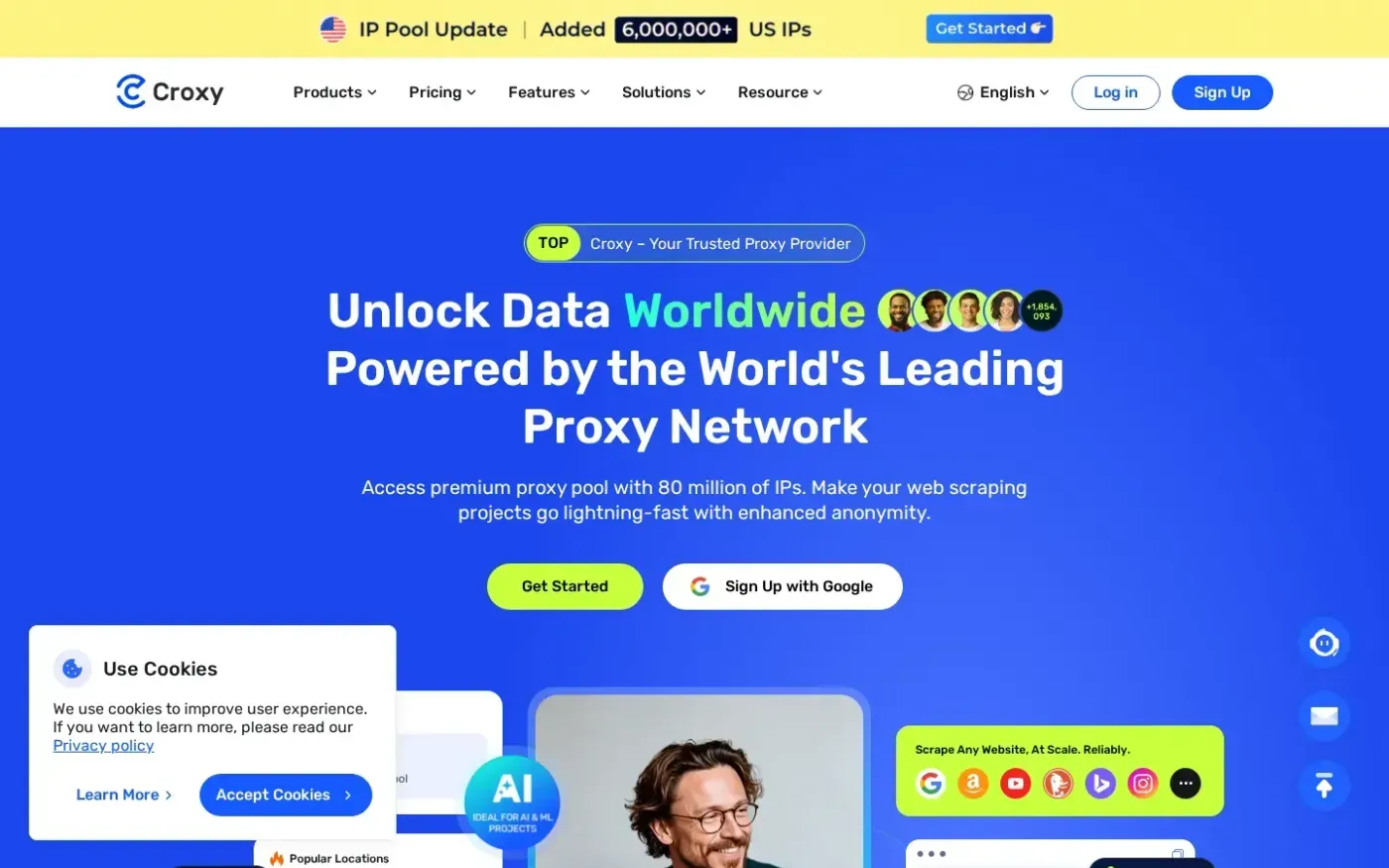
SiteList's review found a clear proxy proposition and obvious Pricing, Sign Up and Get Started routes. That reduces the work of finding where to begin. However, the Resource navigation item led back to the homepage, while Blog and FAQ links sat in the footer. For developers checking implementation details before purchasing, that discoverability gap matters alongside the review's finding of limited technical documentation. Croxy homepage
A more serious credibility problem appeared on the solutions page: its introduction described Croxy customers succeeding with “Webshare proxies.” This does not establish anything about Croxy's network quality. It does make that page a weak basis for deciding whether its use cases match your own. Croxy solutions
Croxy's website performance also varies sharply by page. SiteList recorded a mobile lab largest-contentful paint of 1.05 seconds on the homepage, versus 14.9 seconds and 3,766 KiB transferred on the CroxyProxy page. That page's field LCP was about 3.52 seconds. A quick homepage therefore does not establish a consistently quick browsing journey. These measurements concern website loading, not proxy latency or request success. Croxy review pages, CroxyProxy page
Nsocks exposes more choices before it helps you select one
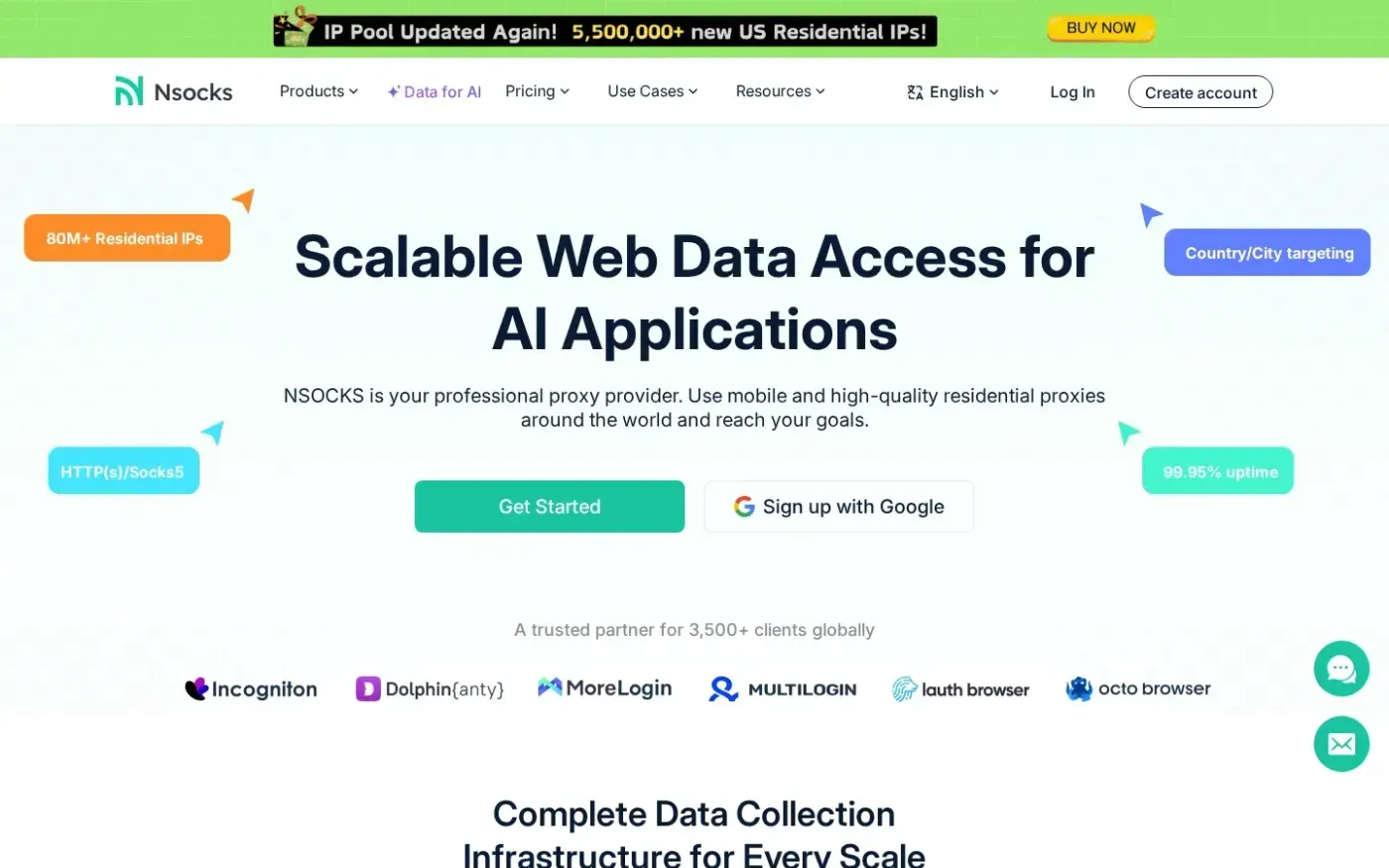
SiteList found routes to residential, unlimited, long-acting ISP and static residential products, alongside three scraper APIs. Its review also identified anti-detect browser integration partners. For teams with a specific integration or proxy-family requirement, that creates useful options to investigate. The drawback is selection work: the buying journey presented multiple pricing routes, and a task page showed four plans plus five product tabs. A buyer seeking ordinary residential scraping access must first separate the relevant product from adjacent offerings. Nsocks homepage
Nsocks documents static residential proxies, scraper APIs and anti-detect browser integrations. The evidence does not establish whether Croxy offers equivalent capabilities.
Nsocks also leaves important commitment questions unresolved. SiteList's pricing evaluation did not find clear cancellation, refund or bandwidth-rollover terms, and identified gaps around SLA and rotation mechanics. Teams running recurring collection jobs should resolve those terms before committing spend; a broader menu does not settle continuity or purchasing risk. Nsocks unlimited residential pricing
Its marketing website has its own performance constraint. Homepage field measurements showed mobile LCP of 3.71 seconds and time to first byte of about 2.40 seconds. The homepage therefore needs loading improvements too, although those results cannot be compared directly with Croxy's separate CroxyProxy page as a network benchmark. Nsocks homepage
Match the choice to the requirement you can already name
Choose Croxy for initial evaluation when residential proxies are already the defined requirement and a clear buying path matters most. Its advantage is ease of entry; the tradeoff is weaker technical decision support and commercial copy that needs independent confirmation.
Choose Nsocks for initial evaluation when static residential options or anti-detect browser integration are concrete requirements. Its broader documented offering supports that shortlist decision. The tradeoff is a more complicated selection journey, thin self-serve help and unresolved service terms.
Neither review establishes comparative scraping success, proxy response time, session reliability or target-site compatibility. Those unknowns prevent a defensible recommendation based on production scraping performance.
Neither pricing page establishes a usable cost comparison
Croxy's checked pricing URL displayed an Error 404 page on Nov 27, 2026. The checked /pricing URL returned an error page; the navigation instead linked to /buy/residential/, whose checkout pricing was not established by this check. No tier amount or billing basis can be confirmed from the checked page. Croxy pricing
Nsocks' residential pricing page, checked Nov 25, 2026, described residential proxies as pay per GB, but displayed “$?/GB” instead of an amount. Its navigation also used unresolved placeholders for other products. The billing unit helps identify what consumption would be charged against, but it does not establish the actual rate, minimum purchase or billing term. Nsocks residential pricing
There is consequently no supported cheapest option, free residential entry point or monthly-versus-annual saving to recommend. Obtain a concrete quote for the intended residential product and usage before choosing on cost.
SiteList's near-equal scores do not settle network quality
Croxy's SiteList AI review score is 64.5/100; Nsocks' is 63.9/100. Both fall in the fair band. The practical distinction is Croxy's clearer entry path versus Nsocks' wider documented choices, with meaningful verification gaps on both sides.
Croxy has no verified user reviews yet, and Nsocks has no verified user reviews yet. SiteList also found identical review markup reused across Croxy residential pages and self-authored review markup on Nsocks pricing pages. Those findings weaken the usefulness of the sites' own review signals; they do not establish customer satisfaction or dissatisfaction. Croxy residential purchase page, Nsocks residential pricing