Outmano makes the stronger public case for small SaaS teams that want named monitoring areas and weekly next actions. Competitoresearch explains its URL-to-weekly-summary workflow clearly. Competitoresearch's broken pricing route, unresolved trust questions on both sites, and different mobile obstacles remain material constraints. A verified cost winner cannot be established.
Start with Outmano if your small SaaS team needs to match specific competitor signals to its research agenda. Evaluate Competitoresearch if a clearly explained URL-led weekly research routine is your main attraction. Outmano communicates audience fit and monitoring scope more explicitly; Competitoresearch makes the starting workflow concrete. Neither website review establishes which product produces more accurate intelligence.
Outmano names the monitoring scope; Competitoresearch explains how research starts
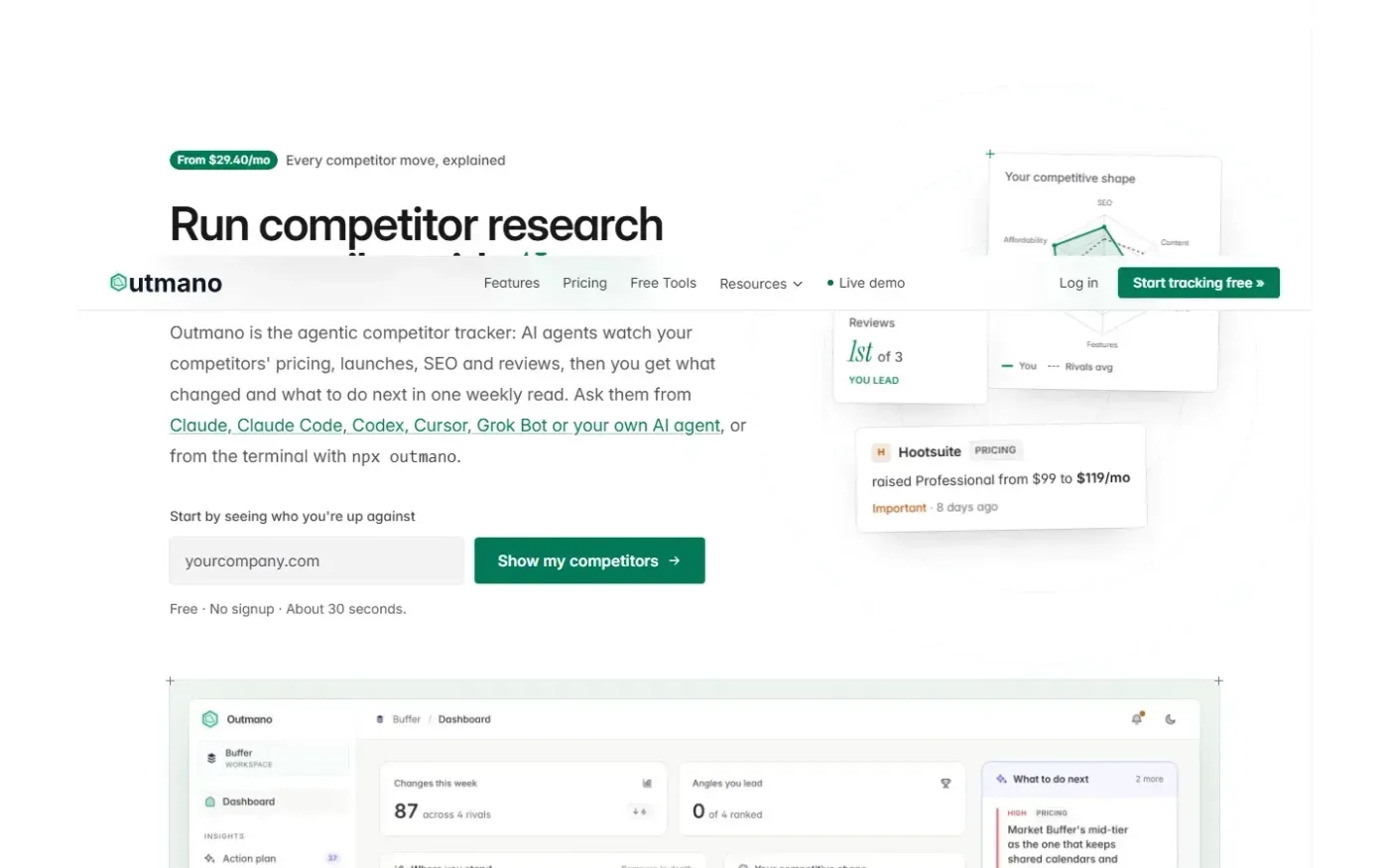
SiteList's review found that Outmano explicitly addresses SaaS teams and names pricing, SEO, ads, content, roadmap, reviews, hiring, and news as monitoring areas. Its site describes a weekly explanation of changes and next actions. This helps founders and marketers assess whether the advertised scope matches the questions they need answered. It does not establish the accuracy, completeness, or usefulness of those answers in practice. Outmano product site
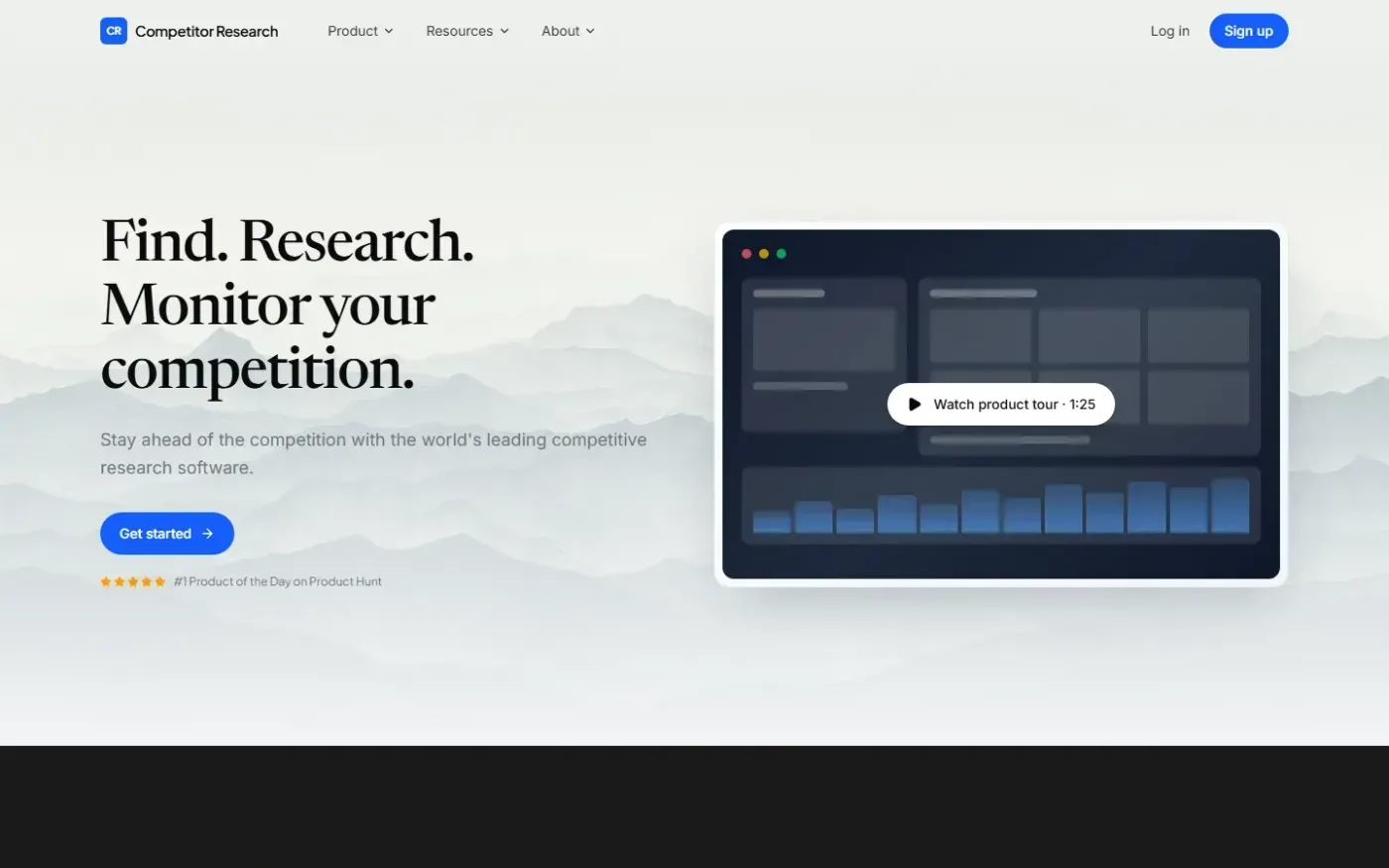
Competitoresearch's strongest explanation is procedural: paste a URL, select rivals, and receive weekly changes. That sequence gives a team a concrete entry point for recurring research. Its audience positioning is less precise. SiteList found that the main headline names competitive research without identifying a role, team size, or vertical; startup use cases appear farther down the site. Buyers therefore have a clearer picture of how to begin than of which teams the product serves best. Competitoresearch product site
The practical distinction is clarity of scope versus clarity of sequence. Outmano is easier to shortlist against a list of monitoring requirements. Competitoresearch is easy to understand as a research routine, but its public explanation leaves more fit questions open. Neither observation proves that one product lacks capabilities advertised by the other.
A readable workflow does not resolve adoption risk
Competitoresearch's direct signup handoff is weakened by missing commercial and operational answers. SiteList found that cancellation, support, service commitments, data handling, and failure recovery were not adequately explained on the reviewed pages. A team considering recurring use should resolve those questions before committing competitive research to the service. Competitoresearch product site
Outmano's clearer buyer positioning also runs ahead of its visible proof. SiteList identified a named founder and company, but did not find an attributable customer outcome or a detailed security and data-handling answer in the reviewed material. Its support page offered contact routes and resource links rather than a topic-level answer. This makes Outmano easier to understand initially without making its operational assurances complete. Outmano About page, support page
Outmano overflows on mobile; Competitoresearch delays main-content visibility
Outmano's homepage measured 660px wide at a 390px viewport in SiteList's review. Its pricing page recorded 1,890.5 ms of total blocking time and 9.1 seconds to interactive in mobile lab testing. Buyers evaluating from a phone may encounter both horizontal overflow and delayed interaction. These are concrete obstacles in the public evaluation journey. Outmano homepage, pricing page