Choose Chatlily when approval-first, revenue-aware Apple Ads workflows are the priority. Choose Searchadsoptimization, now branded AppStance, when you also need ASO keyword intelligence. Chatlily explains its operating model more clearly; AppStance provides a usable paid-plan cost formula. Neither review establishes better campaign results.
Chatlily is the stronger fit for teams that want to connect acquisition spending to revenue while retaining an explicit review step before optimization. Searchadsoptimization, now AppStance, fits teams evaluating Apple Ads automation alongside organic keyword work. The decision turns on workflow control, scope and cost visibility—not demonstrated acquisition performance.
Chatlily makes operator control clear, but leaves a cost question
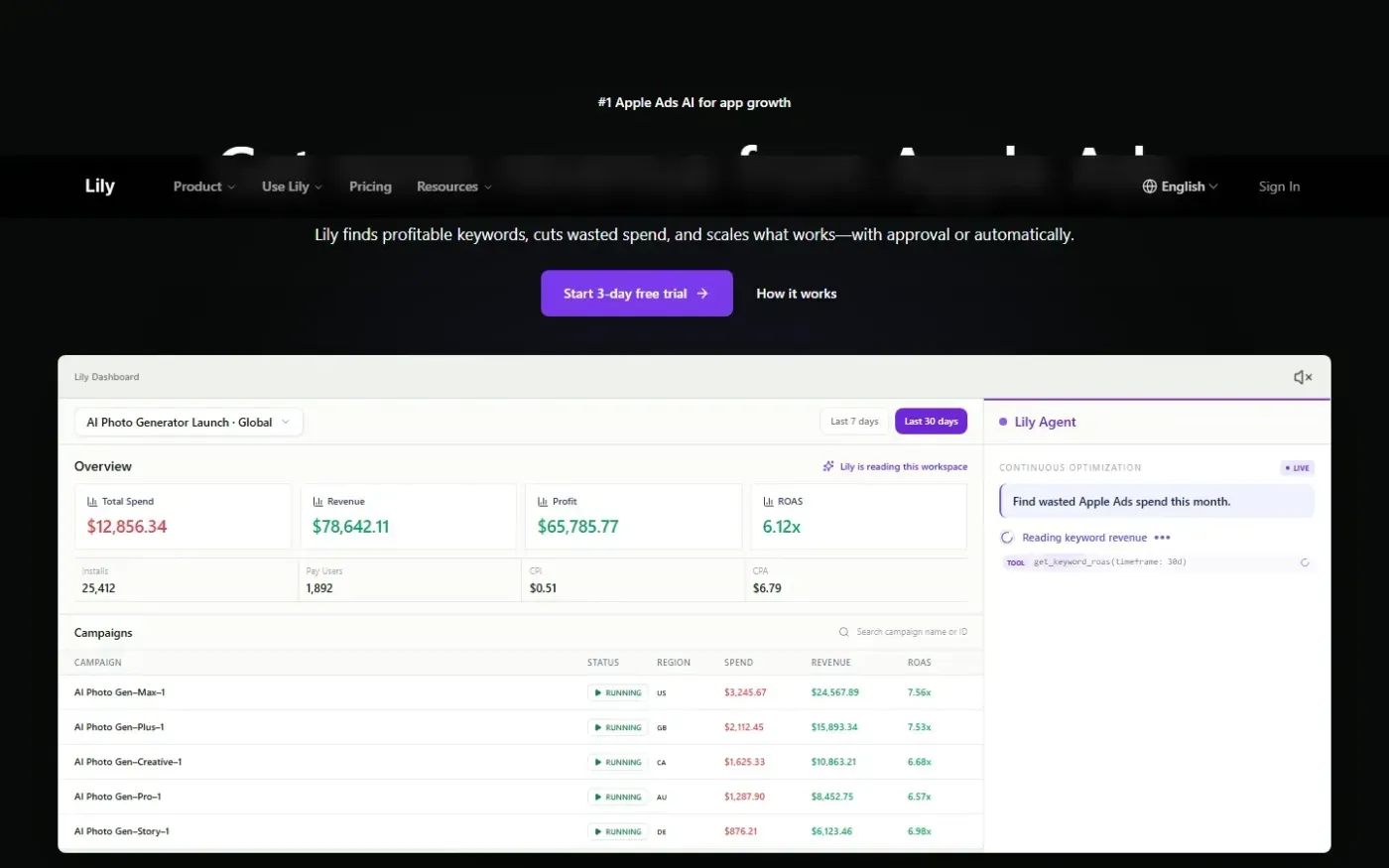
Our review found a concrete starting sequence: connect Apple Ads, add RevenueCat or AppsFlyer, then review recommendations or use Autopilot. That sequence helps a team assess how automation would enter its existing acquisition workflow. Approval-first operation is particularly relevant when an operator wants oversight before adopting automated changes. Chatlily homepage
That clarity has a boundary. The homepage presents AI Agent, Plugin, Ads Revenue, Autopilot, MCP, WebMCP and Ads CLI alongside the trial route. A buyer can understand the core workflow yet still need to establish which product route covers it. Our review also found no attributable customer outcome supporting the revenue proposition. Clear controls and integration descriptions help evaluate fit; they do not establish a return on spending. Chatlily homepage, integrations
The public plugin page also creates friction for mobile evaluation. Our review recorded a mobile lab largest-content render time of about seven seconds and 29 tap targets below 44 pixels at a 390-pixel layout width. A marketer reviewing the product on a phone faces a slower, less comfortable evaluation path. These findings concern the public website and do not establish campaign-tool responsiveness. Chatlily plugin page
AppStance broadens the job, but makes plan selection harder
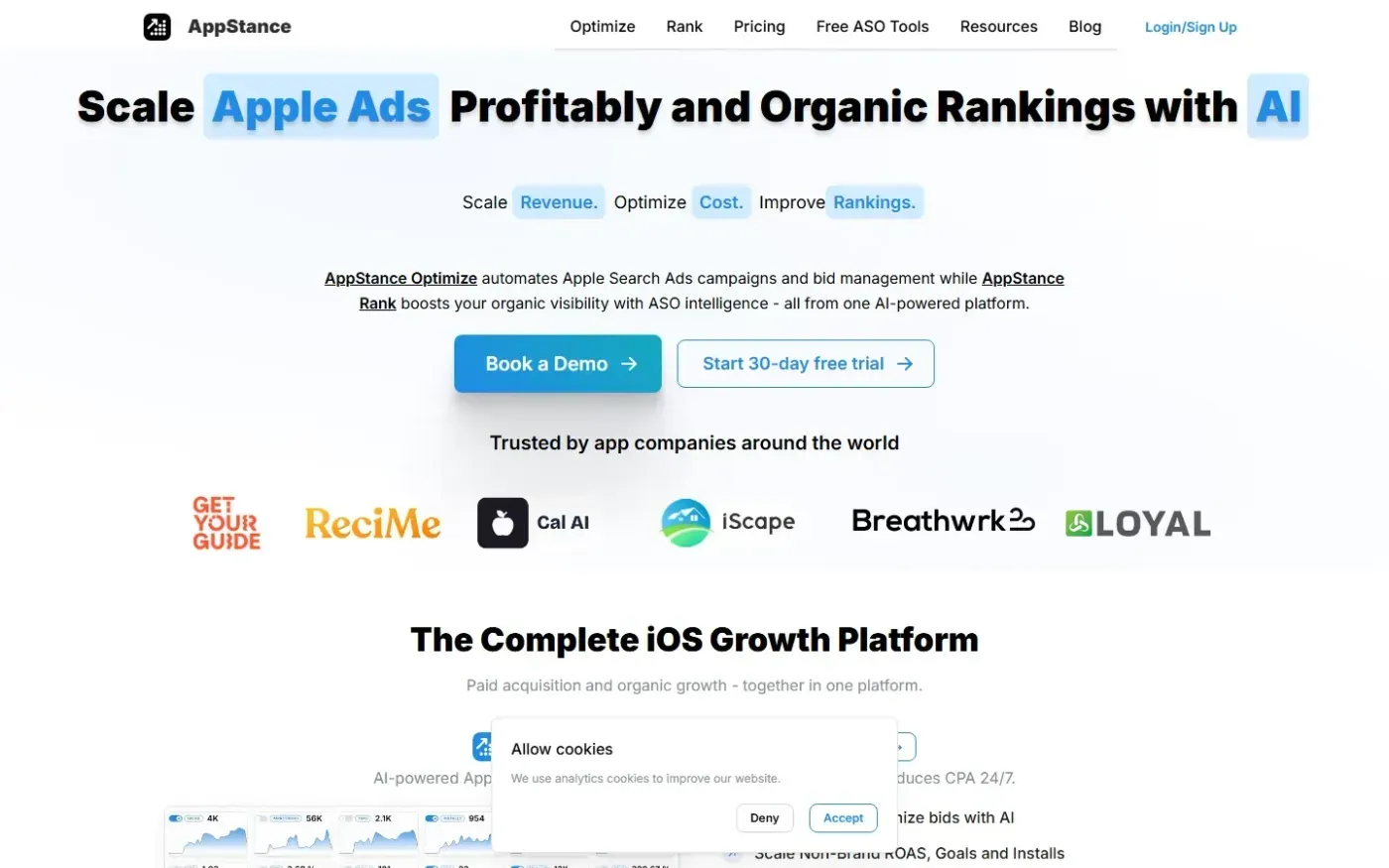
Searchadsoptimization's reviewed site clearly distinguishes Optimize for Apple Ads from Rank for ASO. That gives teams managing both paid acquisition and organic keyword work a reason to consider it. Our review found that its pricing page addresses the product distinction, included features, iOS scope and cancellation routing. The weakness is organization: dense feature lists leave buyers to infer the appropriate plan. A team should first decide whether it needs paid campaign operations, organic keyword work or both, then assess the relevant offer. Searchadsoptimization pricing
The identity change adds a separate evaluation cost. Our review found Searchadsoptimization URLs alongside AppStance branding, appstance.com canonical addresses and an About page describing AppStance as formerly Search Ads Optimization. Buyers following older links should recognize the name change and verify the product and account destination they intend to use. The split identity is not evidence of weaker campaign optimization. Searchadsoptimization homepage, About page
Mobile discovery is another constraint. The reviewed mobile homepage did not expose a readily visible Pricing route, although desktop navigation did. Its homepage also missed the good mobile field LCP threshold, at 3.212 seconds. This means evaluation can require extra navigation and waiting. Chatlily's plugin measurement was a lab result on a different page, so these figures do not support a direct speed contest. Searchadsoptimization homepage
AppStance's customer proof remains limited too. Our review found six named company logos, but no attached result, customer role or campaign context. The six logos appear alongside ‘Trusted by app companies around the world’, but the supplied evidence does not substantiate the relationships or quantify campaign outcomes. Searchadsoptimization homepage