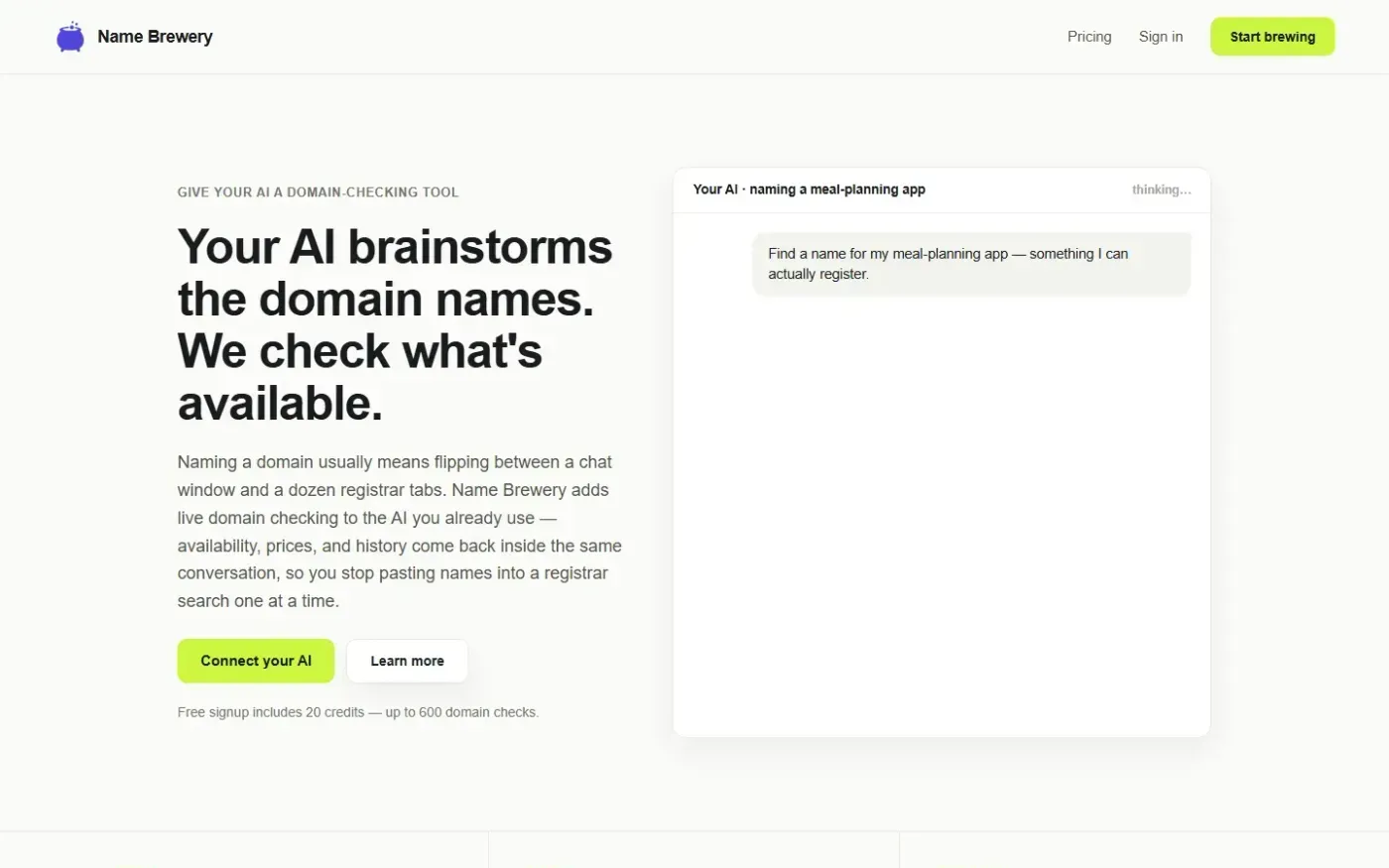
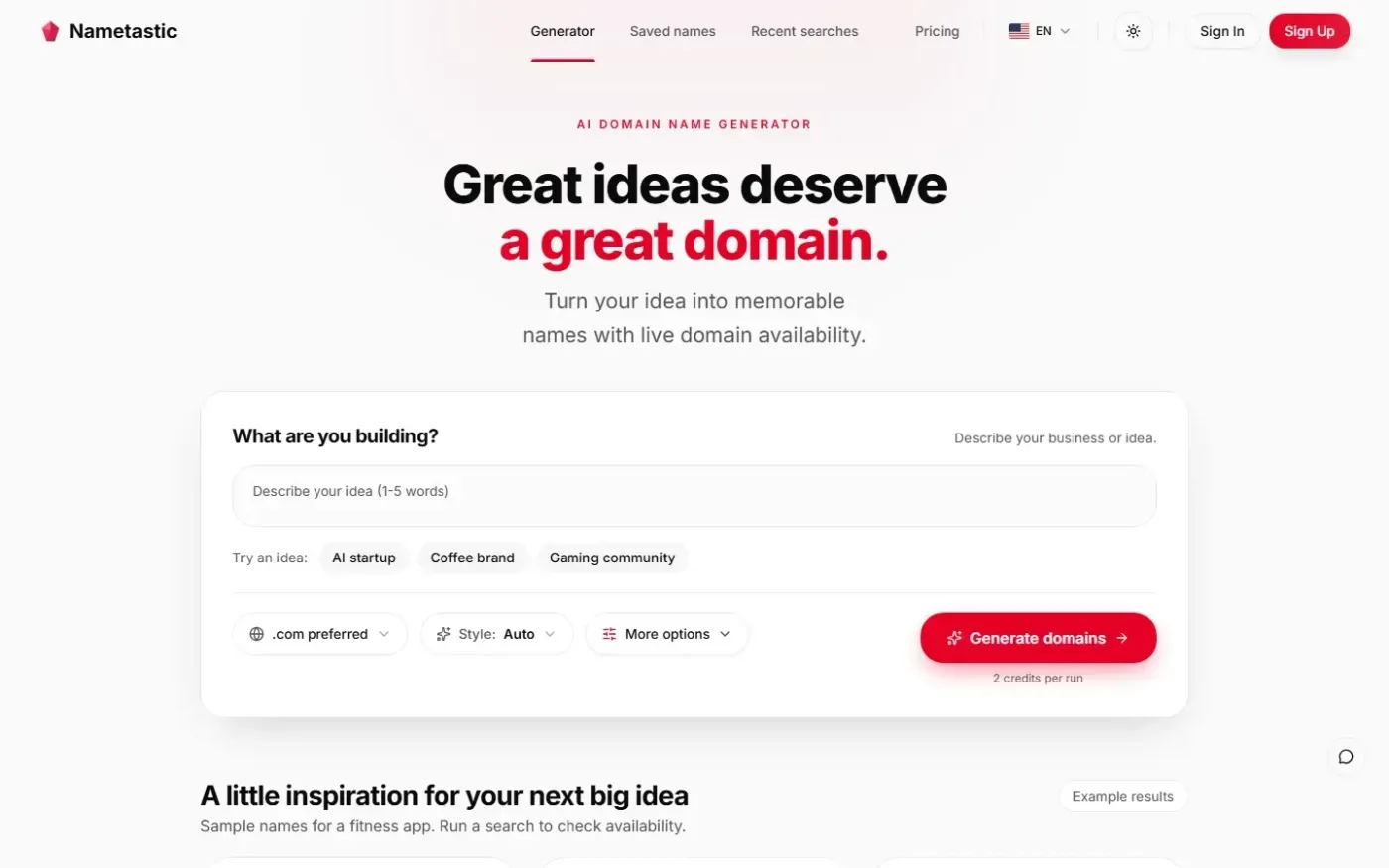
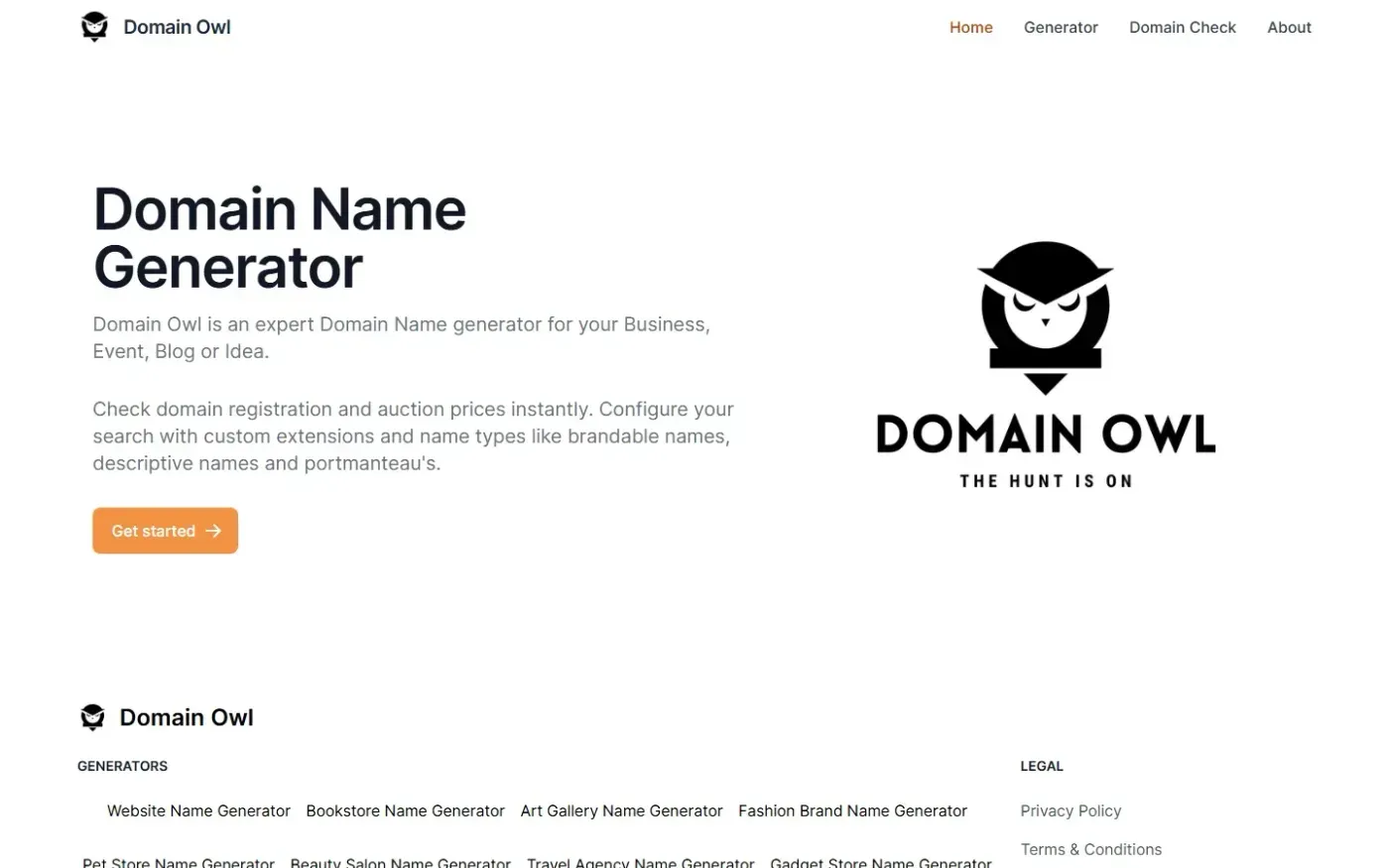
Namebrewery ranks first for its unusually complete domain-vetting workflow. Nametastic is the more flexible choice for varied naming tasks and usage patterns. Domainowl offers useful search filters, but its broken Domain Check journey and pricing that could not be confirmed at the reviewed URL make it the riskiest choice.
Namebrewery connects naming to practical domain due diligence
1. Namebrewery is the strongest overall choice. Its site shows a direct sequence: describe the project, generate names, and inspect live domain results. Beyond availability, it confirms domain history and price checking, registrar purchase links, social-handle links, a USPTO search link, bulk checking, and saved history and favorites. That breadth matters when a founder wants to move from an appealing name to a more informed shortlist without assembling several separate tools.
Our review also found concrete product proof: the homepage demonstrates returned results with availability and price information. Performance was strong in the reviewed lab runs, including a 2.27-second mobile LCP, 0.48-second desktop LCP, and zero layout shift. The limitations sit around the handoff. The browser generator and MCP route compete for attention, public task-oriented MCP documentation was not surfaced as a clear hub, and the checkout contained one input without an accessible name. Choose Namebrewery when domain verification depth matters more than having many unrelated generator categories.
Nametastic offers the most flexible way to buy occasional or recurring searches
2. Nametastic is the better fit for buyers who want broad AI naming coverage, brandability scoring, saved domains, search history, or a deeper research mode. Its first-run prompt asks what the user is building and explains a three-step path from an idea to an available domain. Its credit model also accommodates both occasional projects and recurring work.
The tradeoff is a less polished mobile and editorial experience. Real-user mobile INP measured 318 ms at the 75th percentile, above the 200 ms good threshold, while experimental mobile TTFB was 1.77 seconds. Several pricing controls measured below the 44-by-44-pixel touch-target guideline, and controls reached or crossed the viewport edges. Our crawl also found very long pages presented as single paragraphs. Nametastic still earns second place because its product capabilities and flexible purchasing options are clear, but mobile users and buyers comparing plans may encounter more friction.
Domainowl has useful controls, but a broken commercial path changes the recommendation
3. Domainowl confirms AI domain generation, availability checking, available-domain filtering, and customizable search filters. Its core task is easy to identify, and the reviewed mobile lab run reached the main content in about 1.55 seconds with zero total blocking time and zero layout shift. Those are meaningful strengths for someone who wants a lightweight generator with more control over the search.
The decisive weakness is the journey after generation. The visible Domain Check link led to a Cloudflare 526 invalid-certificate error during our review, blocking the registration path. Pricing could not be confirmed at the reviewed URL. The generator also had 17 of 18 inputs without a label or ARIA accessible name, while many directory links were only about 20 pixels high on mobile. Domainowl is therefore best treated as an exploratory generator until its purchase path, accessibility, and pricing visibility improve.