Spurtest ranks first for enterprise commerce and mobile teams that want a guided evaluation. Testsigma ranks second for teams connecting test management with AI-assisted automation. Reflect ranks third because broken evaluation routes weaken buyer support, although its pricing page provides in the separate pricing snapshot useful plan limits and trial terms. This order reflects product fit and public evaluation readiness, not measured test-engine performance.
Choose Spurtest first for a sales-guided enterprise evaluation, Testsigma for a broader QA workflow, and Reflect when a defined trial is your preferred starting point. None has a verified public subscription amount on the pricing pages checked on Nov 6, 2026. The decisive differences are how well each supports evaluation, what its public workflow explains, and which questions remain unresolved.
1. Spurtest: concrete enterprise proof, limited independent setup help
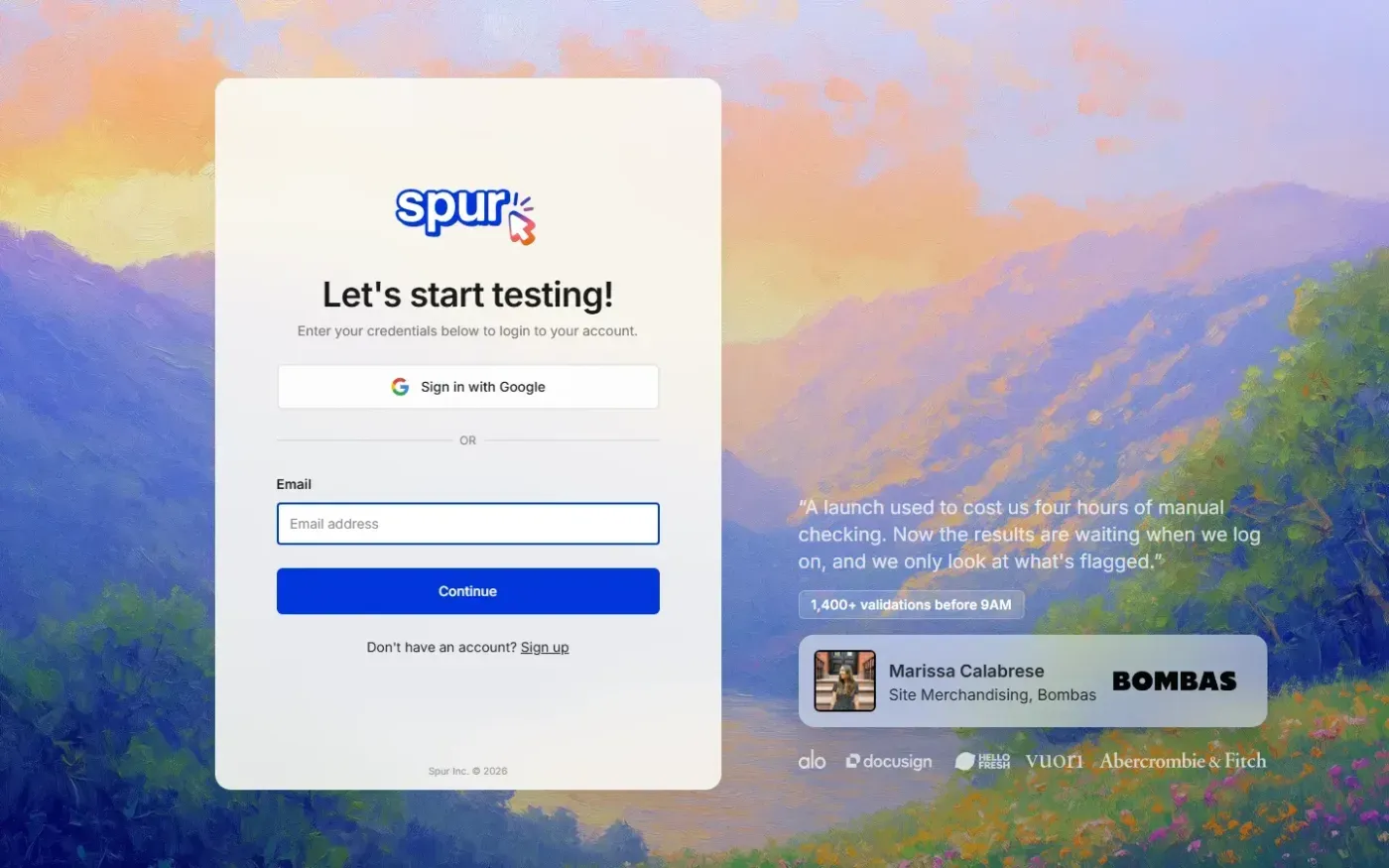
Spurtest presents the clearest fit for enterprise commerce and mobile-app teams. Its public FAQ explains onboarding, code requirements, false positives, production safety, integrations, support, and overages. Our review also observed a named Bombas testimonial describing four hours of manual checking and “1,400+ validations before 9AM.” That is vendor-published customer evidence, rather than a SiteList benchmark, but it gives a buyer a concrete workflow to discuss during evaluation. Spurtest homepage
The constraint is independent investigation. Our review gave public documentation and self-serve help 17/100. Teams that need to establish implementation details before speaking to sales therefore have a weaker starting point. Spurtest is the first choice here when guided onboarding suits the buying process; it is less convincing when accessible public setup guidance is a prerequisite.
Its public mobile experience also creates friction: homepage field p75 LCP was 3.73 seconds, and the mobile layout audit found 106 undersized interactive targets. Those findings affect researching the product on a phone. They do not establish anything about automated test execution speed. Spurtest homepage
2. Testsigma: a connected QA workflow with documentation friction
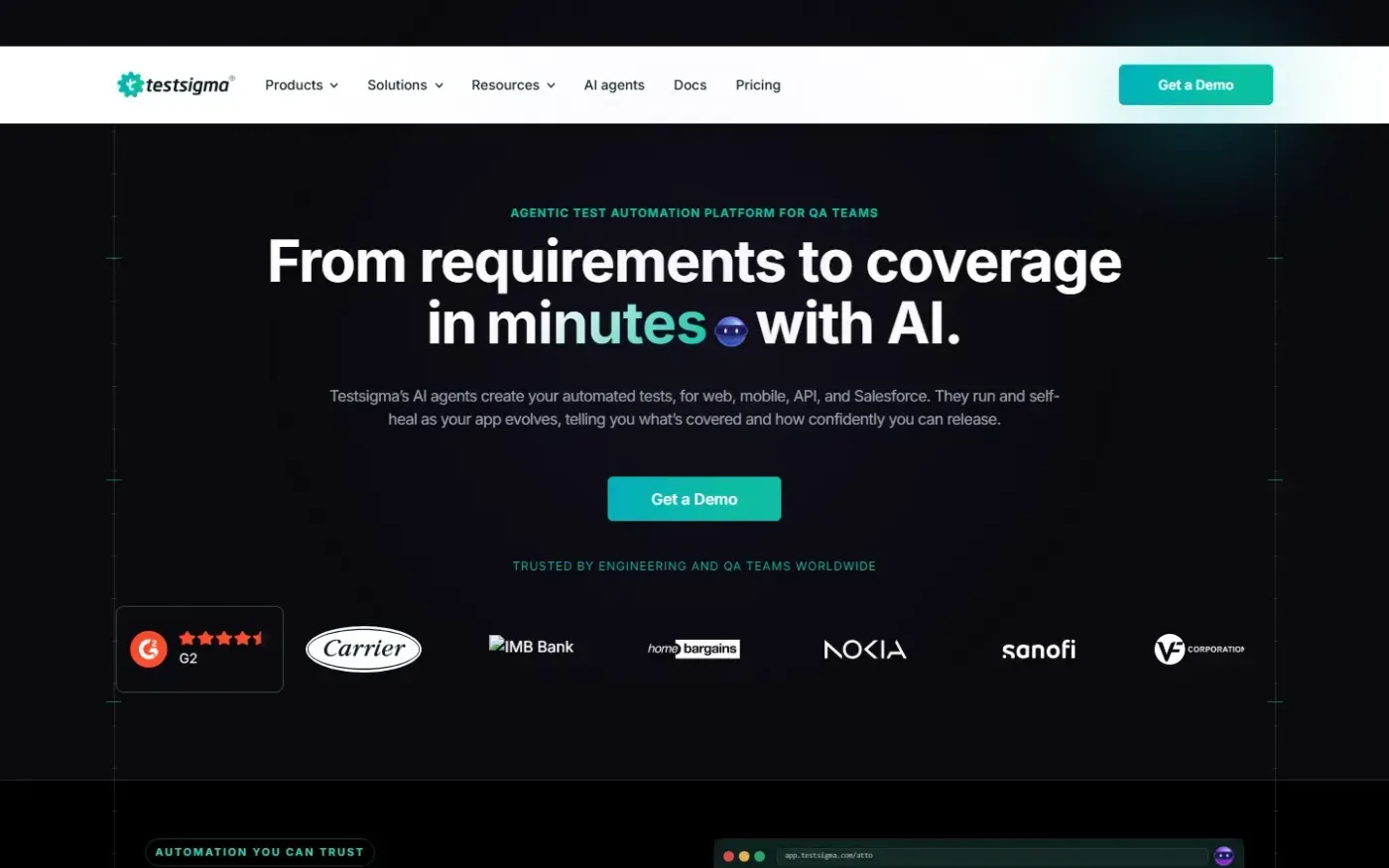
Testsigma is the stronger fit when the evaluation spans test management as well as automated execution. Our review found unusually useful alternative framing in its TestRail comparison: Testsigma describes AI agents handling planning, generation, execution, and bug reporting. That gives QA managers a clearer workflow to assess than an isolated promise to create tests faster. Testsigma comparison
Public documentation exists, which helps teams begin investigating independently. Its accessibility and navigation need scrutiny, however. Our review found that the documentation search input lacked a confirmed accessible name, and a linked test-management documentation URL declared the documentation homepage as its canonical destination. These findings raise practical questions about locating relevant help, especially for assistive-technology users. Testsigma documentation
Testsigma also leaves plan selection underexplained. Our review found no small-team recommendation in the examined pricing view. The test-management FAQ states $14 per user per month, while its Offer schema lists "8$"; the broader platform pricing view presents custom-priced Pro and Enterprise plans. These conflicting product and pricing signals prevent a reliable cost comparison. Choose it for the connected QA workflow, but establish the exact product scope, included automation, and commercial terms before committing. Testsigma pricing