

Skip to content
SiteList

Best multi-model LLM API gateways: LLMWise vs Tokenhot vs Codexhot

Last updated (today)

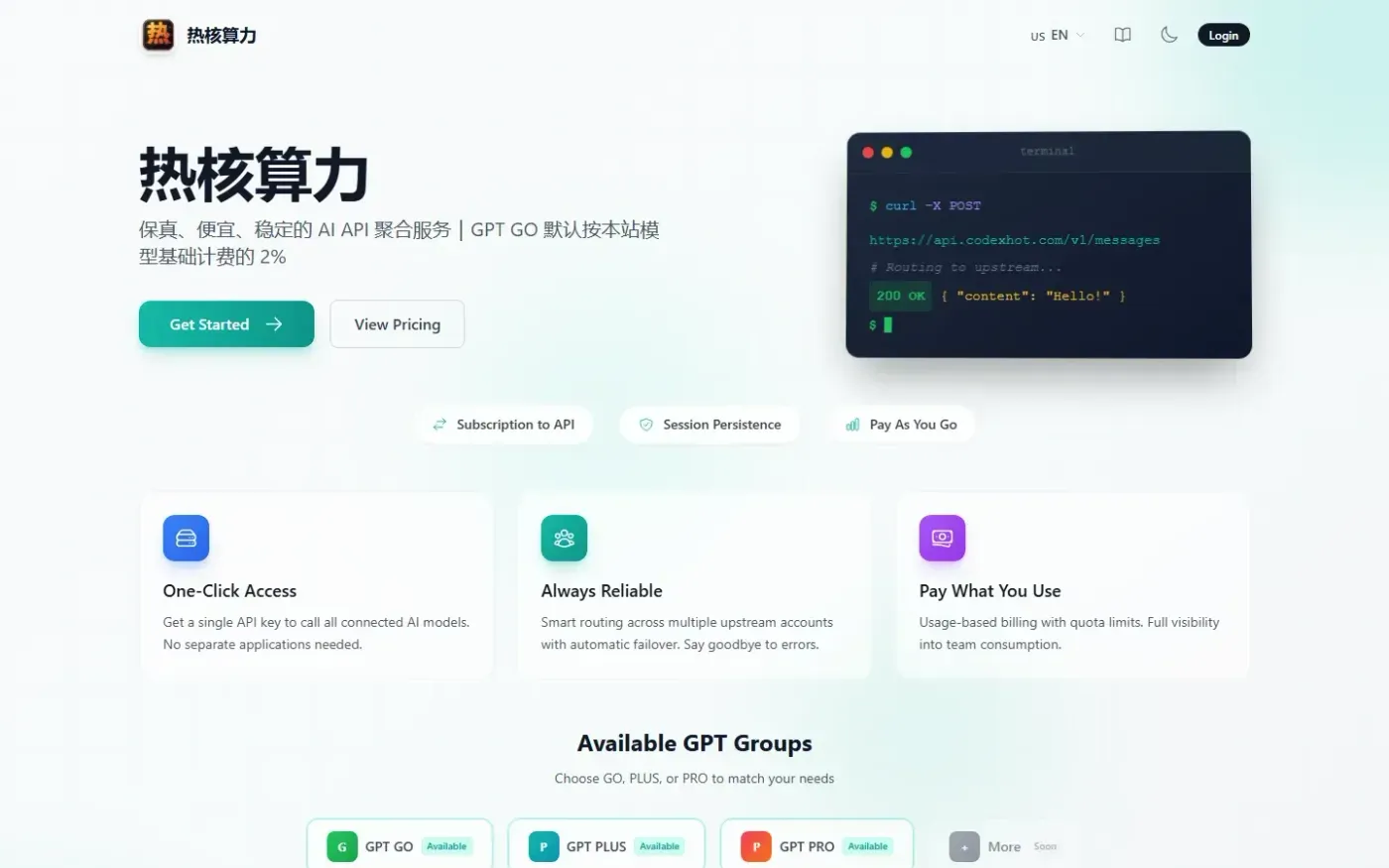
Llmwise, Tokenhot and Codexhot are compared using their captured homepages.

Feature comparison

FeatureLlmwiseTokenhotCodexhot
Multi-model unified accessFoundFoundFound
OpenAI-compatible integrationFoundFoundFound
Automatic or smart routingFoundFoundFound
BYOK supportFoundNot foundNot found
Model compare, blend and judgeFoundNot foundNot found
Semantic memoryFoundNot foundNot found
Usage-based billingNot foundFoundFound
Python and Node.js examplesNot foundNot foundFound
SSE implementation examplesNot foundNot foundFound

✓ found in our review of the product’s site. — not found there, which doesn’t mean it’s missing.

Pricing, sourced

Llmwise

Free
$0 one timeno card
Plus
$10 per month + applicable tax
Pro
$20 per month + applicable tax
Max
$50 per month + applicable tax

Checked Pricing page

Tokenhot

Claude Haiku 5.5 input
$0.1700/M$0.5000/M
Claude Haiku 5.5 output
$0.8500/M$2.5000/M
Gemini Nano Banana 2.1
$0.0530/s

Checked Pricing page

Codexhot

No prices listed on its pricing page.

Checked Pricing page

LLMWise ranks first for the broadest confirmed routing toolkit and the strongest overall SiteList review. Tokenhot is the better fit when public, model-level usage pricing matters most. Codexhot offers useful integration guides and smart routing, but its public pricing and operational limits remain the least clear.

LLMWise has the broadest confirmed control layer

LLMWise takes first place. Our review confirmed auto routing, BYOK support, an OpenAI-compatible API, semantic memory, transparent cost tracking, and Compare, Blend, and Judge workflows. That combination gives developers more control over how models are selected and evaluated than the confirmed feature sets of the other two services.

The surrounding developer experience is also the strongest in this group. LLMWise earned an 86.3/100 SiteList review score, with particularly clear developer positioning, prominent documentation, and concrete cost messaging. Its site explicitly identifies developers as an audience and gives direct paths to its API documentation.

There are real constraints. The pricing page describes message allowances and fixed monthly subscriptions rather than showing per-token API economics. That can make the listed plans easier to budget, but the reviewed public material does not establish how those allowances map to production API workloads. Our review also found a poorly placed Starter conversion path, duplicate URL variants, and an oversized homepage image. These are presentation and acquisition issues rather than missing routing capabilities, but they add friction around an otherwise strong product story.

Choose LLMWise when routing controls, BYOK, model comparison, and predictable subscriptions matter more than immediately visible per-token rates.

Tokenhot makes unit costs visible but carries larger quality risks

Tokenhot ranks second. It confirms a unified LLM gateway, OpenAI SDK compatibility, global low-latency routing, and pay-as-you-go billing. Its pricing page lists 100 models and exposes model-specific units, including input and output prices for Claude Haiku 5.5. This is the clearest option here for buyers who want to inspect usage charges before choosing a model.

That cost visibility comes with more public-site risk. Tokenhot received a 72.3/100 SiteList review score. Our mobile measurement recorded an 8.9-second largest contentful paint, with an oversized image and render-blocking third-party scripts contributing to the delay. We also found two broken documentation URLs, soft-404 behavior, low-contrast body text, and visible copy errors. For an API provider, broken policy-document links and slow first contact can make technical due diligence harder even when the pricing catalogue is detailed.

Choose Tokenhot when model-level usage pricing and broad catalogue filtering are decisive, and accept that its public documentation and site quality need closer checking.

Codexhot has the best confirmed integration guidance but the most pricing uncertainty

Painterly homepage-style scene representing the shared function of Codexhot and Llmwise.

Codexhot ranks third. Its strongest distinction is implementation guidance. Our review confirmed Python and Node.js examples, Chat Completions migration help, Responses API support, Messages API and server-sent-event examples, and an error-diagnosis guide. It also confirms one API key, smart routing, and usage-based billing. That makes it credible for developers who value migration instructions and practical API examples.

The problem is decision-stage clarity. Its pricing page showed no amount when checked on Oct 12, 2026, so buyers cannot verify current public rates from that page. The reviewed public surface also left cost mechanics, quotas, reliability, and model coverage incompletely explained. A Get Started button leads to a login flow before signup requirements become clear.

Codexhot received a 65.7/100 SiteList review score. Its mobile homepage reached a 4.1-second largest contentful paint and transferred about 1.7 MB. Our review also found soft-404 behavior, blocked mobile zoom, a heading-order failure, and insufficient color contrast. These shortcomings do not negate the useful guides, but they increase the amount of validation a production buyer must do.

Choose Codexhot when its migration examples match your integration work and you are prepared to confirm prices, quotas, model availability, and reliability terms directly before committing.

Fixed subscriptions and usage pricing create different buying risks

LLMWise’s pricing page, checked Oct 12, 2026, lists a one-time free trial with five messages, Plus at $10 per month plus applicable tax, Pro at $20 per month plus applicable tax, and Max at $50 per month plus applicable tax. Its fixed plans improve budget predictability, but message allowances are not directly comparable with per-token API charges.

Tokenhot’s pricing page, checked Oct 12, 2026, uses model-specific units. The visible Claude Haiku 5.5 entry shows two input amounts and two output amounts, while another listed model uses per-second pricing. That granularity helps workload costing, although buyers still need to identify which displayed rate applies to their selected channel or configuration.

Codexhot’s pricing page, checked Oct 12, 2026, listed no visible amount. Its usage-based model is confirmed, but a meaningful cost comparison is not possible from the public pricing page alone.

SiteList review summary

The ranking follows both capability coverage and buyer-facing clarity: LLMWise scored 86.3/100, Tokenhot 72.3/100, and Codexhot 65.7/100. LLMWise leads on confirmed routing controls and overall presentation. Tokenhot leads on visible model-level usage prices. Codexhot stands out for integration guides but trails on public commercial detail.

None of the three has verified user reviews on SiteList yet. The verdict therefore rests on SiteList’s review findings, confirmed product capabilities, and each product’s published pricing information rather than customer sentiment.

Questions buyers actually ask

Which gateway has the broadest confirmed routing toolkit?

LLMWise. Our review confirmed auto routing, BYOK, semantic memory, transparent cost tracking, and Compare, Blend, and Judge workflows. LLMWise has the broadest set of capabilities confirmed in the supplied review evidence.

Which option is best for visible pay-as-you-go pricing?

Tokenhot. Its pricing page publishes model-level input, output, and per-second amounts. Codexhot confirms usage-based billing but lists no visible amount, while LLMWise presents fixed monthly plans and message allowances.

Which service offers the clearest integration guidance?

Codexhot has the strongest confirmed guide set, including Python and Node.js examples, migration guidance, Responses API support, Messages API and SSE examples, and error diagnosis. Buyers still need to confirm its current prices, quotas, reliability terms, and model coverage.

Do these products have verified user reviews on SiteList?

No. LLMWise, Tokenhot, and Codexhot each have fewer than three approved user reviews, so no user score is presented.

Read Llmwise reviewRead Tokenhot reviewRead Codexhot review

Built from SiteList technical reviews; user reviews count once a product has 3 approved. Pricing facts carry their source and date; if something has drifted, use “Report outdated” above to schedule a re-check.