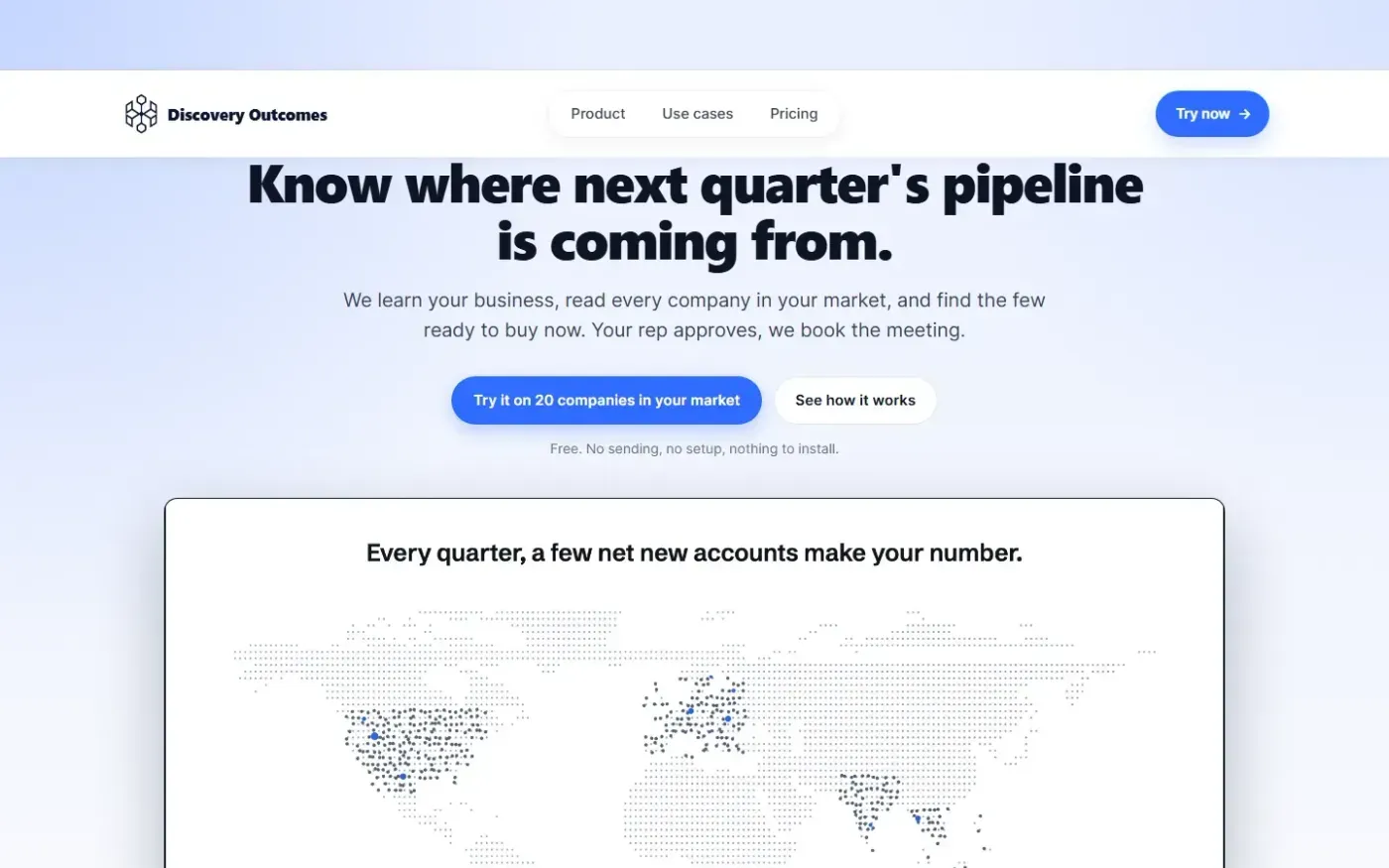
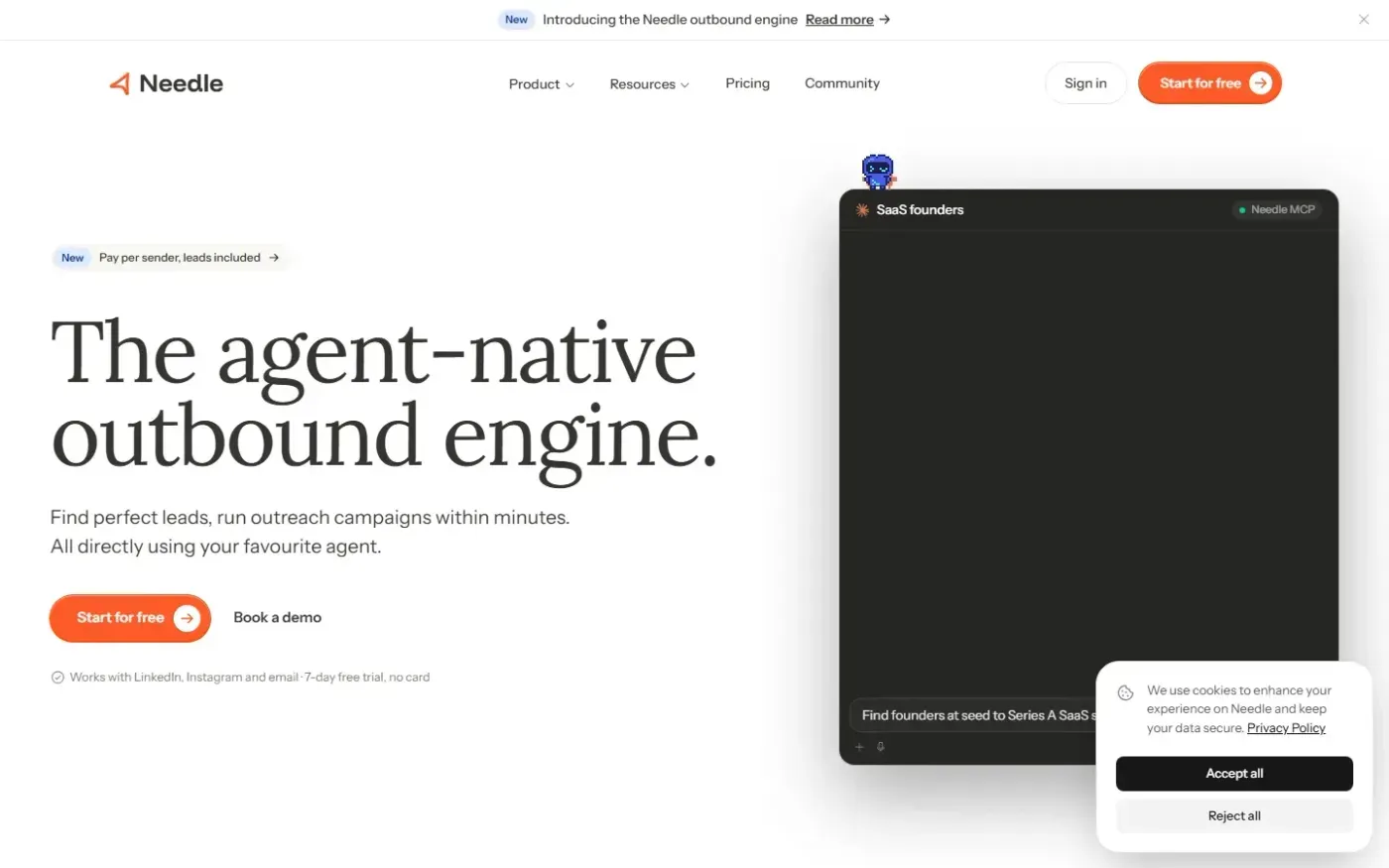
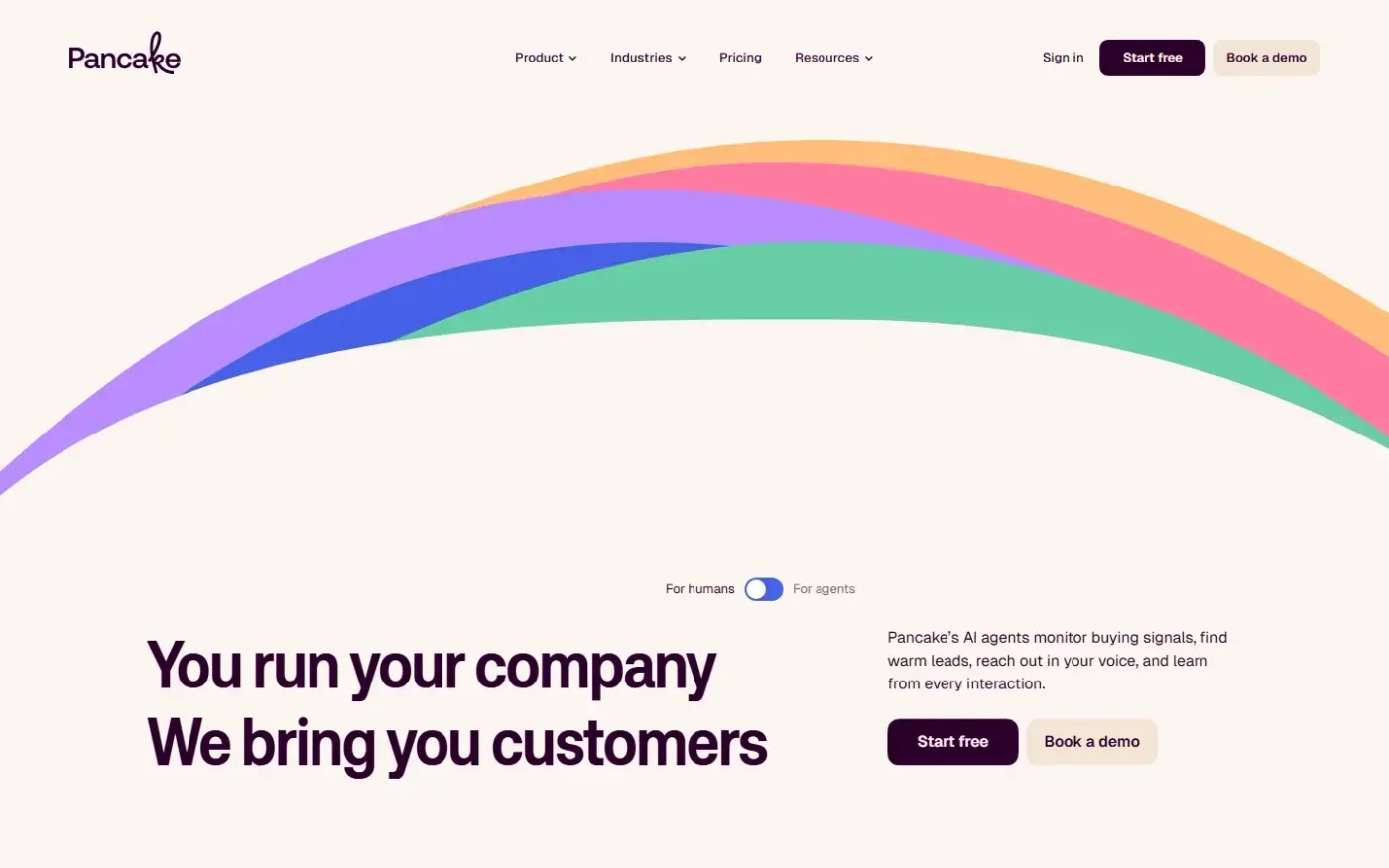
Discovery Outcomes ranks first for SaaS teams seeking researched accounts and rep-approved outreach. Needle AI ranks second for teams that want to operate campaigns through agents and APIs. Pancake ranks third, with a clear approval-first workflow but insufficient visible pricing to judge its value against the others.
Choose Discovery Outcomes when the main problem is covering a software market your sales team cannot work thoroughly. Choose Needle AI when your team wants direct control over agent-assisted prospecting and multichannel campaigns. Choose Pancake when reviewing prospect fit and editing outreach before approval is central to your buying decision. This order reflects fit and public evaluation evidence; it does not establish which product produces more sales.
1. Discovery Outcomes makes the research concrete, but customer proof remains limited
Our review found unusually specific positioning: the service connects market coverage, account research and rep-approved messages. Its product page also identifies its example company and people as fictional. That combination matters: buyers can inspect how an account plan is presented, but cannot treat the illustration as evidence of customer results. Ask to evaluate the research against your own market before expanding the engagement. Product evidence.
The entry path also requires a conversation. Our review found that prominent trial links ultimately handed visitors to Google Calendar. This suits a team seeking guided evaluation, while adding friction for a founder expecting immediate software access. Homepage evidence.
Its public site has delivery weaknesses. The measured homepage transferred about 8.8 MB, with repeated logo assets contributing heavily. Mobile lab LCP was 2.27 seconds, while another lab run reached 2.94 seconds; no field measurements were available. These findings concern the buying experience, not the quality or speed of its prospect research. Performance evidence.
2. Needle AI gives technical teams more integration visibility, with access problems to resolve
Our review found substantial public API and MCP documentation, plus explanations of warm-up, limits and suppression lists. That makes Needle the strongest fit here for a team evaluating how outbound will connect to its existing agents and workflows. However, the review found no named conversion or reply-rate case study alongside those safety explanations. Documented controls help assess operation; they do not establish pipeline performance. Pricing and safety evidence.
Documentation access was also inconsistent. Eighteen internal URLs returned HTTP 403 responses during the review, including the documentation entry page. Meanwhile, pages served on needle-ai.com declared canonicals on needle.app without a complete domain redirect. A technical buyer should confirm access to the exact documentation and integration paths needed before committing. These are public-site findings, not evidence that the application itself fails. Documentation evidence, domain evidence.
3. Pancake makes approval visible, but price and outcome evidence leave a larger decision gap
Our review identified prospect-fit explanations, editable messages and an approval-first workflow as concrete strengths. Pancake deserves consideration when a founder wants to inspect why a prospect fits and control the message before outreach. The site’s customer-acquisition promise had no adjacent quantified outcome, so that workflow clarity should not be mistaken for demonstrated sales results. Workflow evidence.